
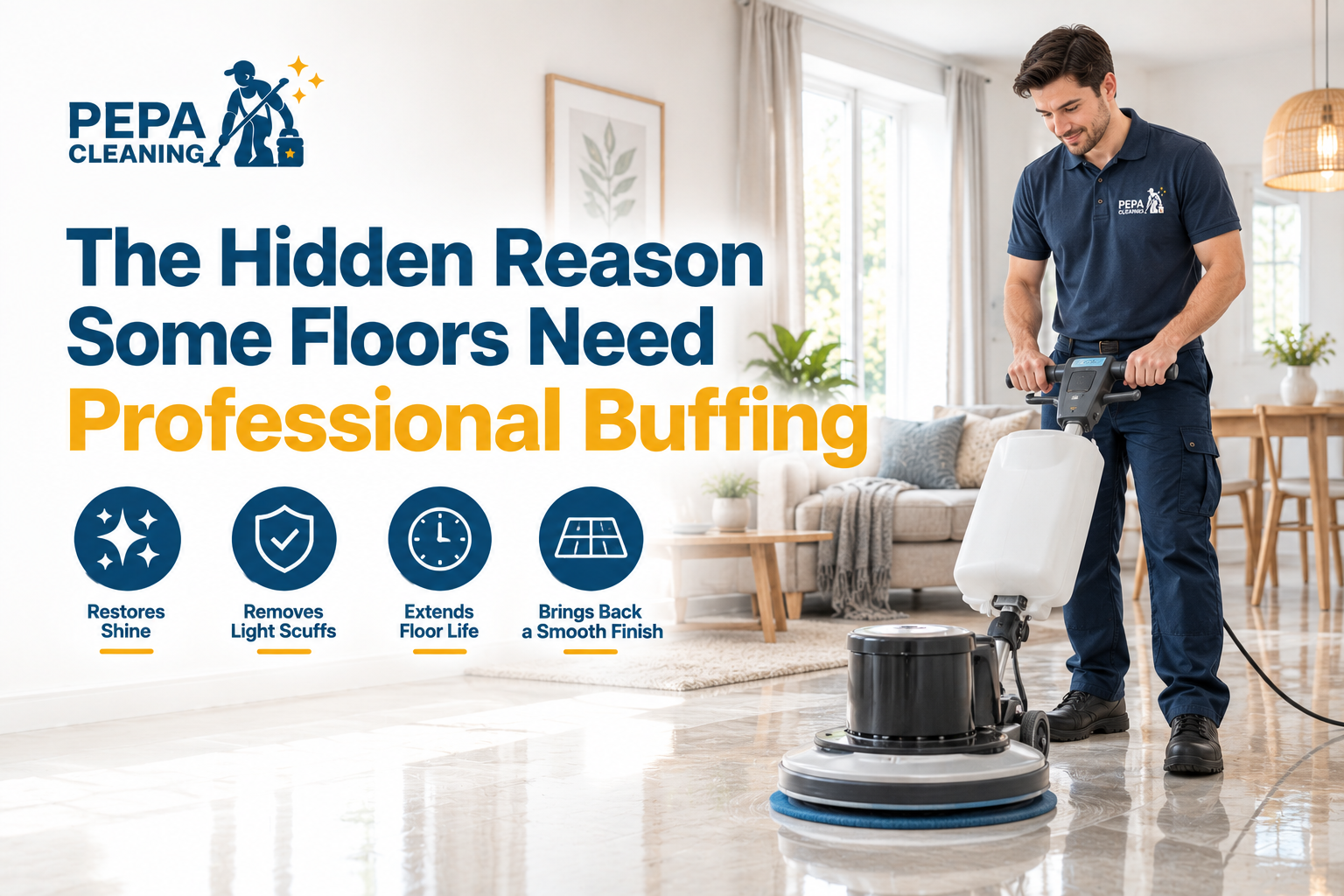
Discover why some floors need professional buffing, how it improves suitable floor finishes, and when cleaning or other treatments may be better.
Floors experience daily wear from foot traffic, furniture movement, dust and spills. Over time, even regularly cleaned floors can lose their shine and develop visible marks. However, ordinary cleaning may not always restore their original appearance.
This is where professional floor buffing may help. The treatment can improve the finish of certain hard floors, making them look cleaner and more even. However, buffing is not suitable for every flooring material. Understanding the condition of your floors can help you choose the right approach.
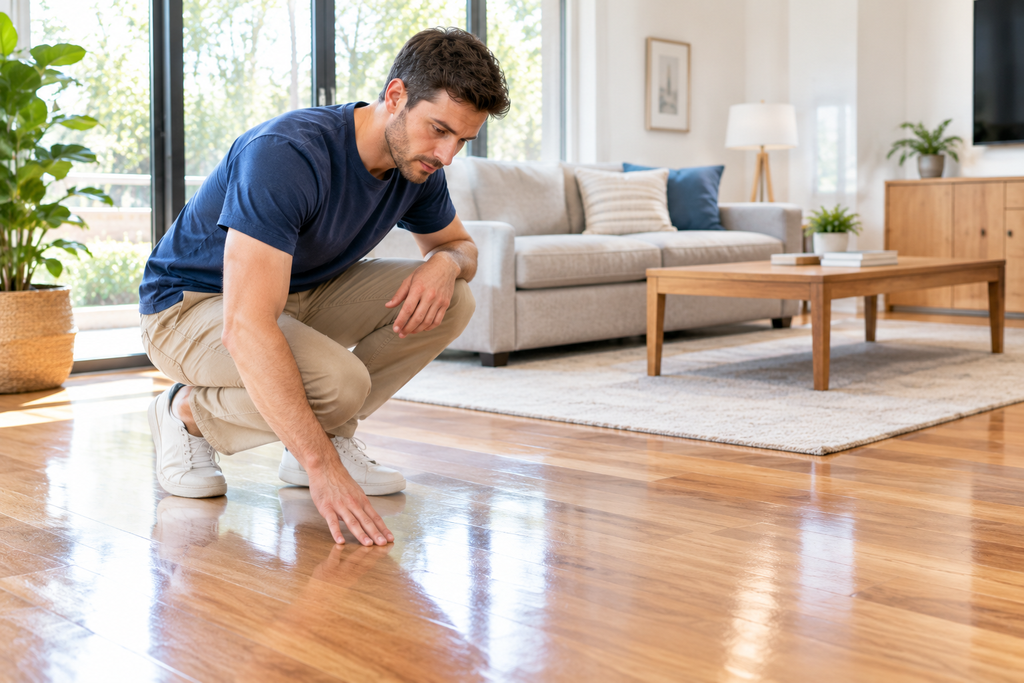
1. What Is Professional Floor Buffing?
Professional floor buffing is a maintenance process that uses suitable equipment to improve the appearance of certain hard floor surfaces. Depending on the flooring material and finish, it may help restore shine and reduce the appearance of light surface marks.
Unlike ordinary mopping, which mainly removes dirt and residue, buffing focuses on the floor’s finish. However, it does not repair every scratch or fix structural damage.
Before choosing this treatment, check the manufacturer’s care instructions or consult a flooring specialist. The correct method depends on the surface and its existing finish.
2. Why Some Floors Lose Their Shine
Even with regular cleaning, floors can gradually look dull. Several factors contribute to this change.
- Daily foot traffic: Shoes can bring dirt and small particles indoors, which may affect the floor’s finish over time.
- Cleaning residue: Using too much cleaning solution can leave a film that makes some surfaces look cloudy.
- Furniture movement: Chairs and tables may leave scuffs or marks when moved across the floor.
- Incorrect cleaning products: Products that are unsuitable for a particular material may damage its finish.
As a result, mopping alone may not always improve the appearance of a dull floor. Depending on the material, professional buffing or another specialist treatment may be more appropriate.
3. Signs Your Floors May Need Professional Buffing
Not every mark means your floors need buffing. However, a few signs may indicate that ordinary cleaning is no longer enough.
Dull or Uneven Shine
Some areas may appear less shiny than others, especially in hallways and other busy spaces. If the floor material is suitable, buffing may help improve the consistency of its finish.
Light Scuff Marks
Furniture and everyday movement can leave visible scuffs. Certain marks may respond to professional treatment, although deeper scratches may require a different solution.
Persistent Surface Marks
If marks remain after suitable cleaning, the issue may involve the finish rather than loose dirt. A professional assessment can help determine whether buffing is appropriate.
4. Which Floor Types Can Benefit From Buffing?
Floor buffing is not a universal solution. Different materials need different maintenance methods, so identifying your flooring type is essential.
Suitable Hard Floors
Some finished hard floors may benefit from buffing when their surface has become dull or lightly marked. The correct process depends on the manufacturer’s recommendations and the type of finish.
Vinyl and Resilient Flooring
Some vinyl and resilient floors may support specific maintenance treatments. However, not all products or buffing methods are suitable, particularly when the surface has a protective coating.
Natural Stone Floors
Natural stone can require specialist care. Depending on the stone and its finish, polishing or other restoration methods may be more appropriate than conventional buffing.
Wooden Floors
Wooden floors need careful treatment because their finishes vary. Certain surfaces may be unsuitable for buffing, especially if the coating is damaged or the wood is exposed.
Important: Always confirm the flooring material and finish before arranging professional treatment. Using unsuitable equipment or products can cause further damage.
5. Floor Buffing Versus Ordinary Cleaning
Both cleaning and buffing can help maintain suitable flooring, but they serve different purposes.
Ordinary cleaning removes dust, spills and everyday dirt. It is generally the first step when a floor looks untidy or has a layer of residue.
In comparison, buffing focuses on improving the finish of compatible surfaces. Therefore, it may be worth considering when the floor is already clean but still looks dull.
However, buffing cannot compensate for every problem. If the floor has deep scratches, broken tiles, peeling coatings or structural damage, repairs or replacement may be necessary.
6. Why Professional Floor Buffing Matters
Professional floor buffing requires the right equipment and an understanding of different flooring materials. An unsuitable process can leave marks, damage protective finishes or create an uneven appearance.
A professional can assess the surface before recommending a treatment. This is particularly helpful when the flooring material is unfamiliar or the existing finish is difficult to identify.
Additionally, expert advice may prevent unnecessary work. For example, a floor that looks dull because of cleaning residue may only need a suitable cleaning method rather than buffing.
7. How to Maintain Your Floors After Buffing
After professional treatment, proper maintenance can help preserve the finish.
- Remove loose dirt regularly by sweeping or vacuuming with suitable equipment.
- Clean spills promptly to prevent residue and staining.
- Use products recommended for your flooring material.
- Avoid dragging heavy furniture across the surface.
- Follow the professional’s advice about cleaning frequency and aftercare.
Most importantly, do not assume that every floor needs frequent buffing. The right maintenance routine depends on the material, the amount of foot traffic and the condition of the finish.
Frequently Asked Questions About Floor Buffing
Does Floor Buffing Remove Deep Scratches?
Not necessarily. Buffing may improve the appearance of certain light marks on suitable surfaces, but deep scratches may require specialist repair or refinishing.
How Often Should Floors Be Buffed?
There is no single schedule for every floor. The frequency depends on the material, finish, level of use and manufacturer’s guidance. A professional can recommend a suitable maintenance plan.
Is Floor Buffing the Same as Floor Polishing?
Not exactly. The terms can describe different processes depending on the material and equipment used. Polishing may involve specific products or restoration methods, while buffing often focuses on improving the finish of compatible surfaces.
Can Every Hard Floor Be Buffed?
No. Some floors have coatings or materials that may be damaged by buffing. Always confirm that the method is suitable before proceeding.
Final Thoughts on Professional Floor Buffing
Some floors need more than ordinary cleaning because daily use can affect their finish over time. Professional floor buffing may help restore the appearance of suitable surfaces, particularly when they look dull or have light scuff marks.

However, the best treatment depends on the flooring material and the condition of the surface. By assessing the floor first and following the correct maintenance routine, you can make a more informed decision and avoid unnecessary damage.
Need Professional Floor Care in West London?
PEPA Cleaning provides professional cleaning services across West London, including hard floor care, carpet cleaning, upholstery cleaning and window cleaning.
If your floors look dull or need specialist attention, get in touch to discuss your requirements and request a free quote.
Phone or WhatsApp: +44 7721 830704
Email: contact@pepacleaning.com
Website: pepacleaning.com
Get in touch today for a free quote.
Leave a Reply