

Discover simple dining chair cleaning tips to remove everyday dirt, protect upholstery, care for wood and keep your dining area looking fresh.
Dining chairs are used every day, so they can quickly collect dust, food crumbs and stains. Over time, frequent use may also leave marks on the seats, legs and backs. However, regular care can help keep your chairs clean and presentable.
The right approach depends on the material. Fabric chairs need different care from leather or wooden designs. Therefore, understanding your chair’s finish before cleaning can help prevent damage and maintain its appearance.

1. Start With Regular Dining Chair Cleaning
A simple cleaning routine can make a noticeable difference. First, remove crumbs and loose dirt from the seat, back and joints. For upholstered chairs, use a vacuum with a suitable attachment to reach seams and creases.
For wooden or other hard surfaces, wipe away dust with a soft cloth. In addition, clean visible spills promptly to reduce the chance of staining.
Avoid using too much water, especially on wood and materials that may absorb moisture. Instead, follow the manufacturer’s care instructions and use products suitable for the surface.
2. Treat Food and Drink Spills Quickly
Dining chairs are exposed to food and drinks, particularly during family meals and gatherings. As a result, spills can become a common source of stains.
When a spill occurs, gently blot the area with a clean cloth if the material allows it. Avoid rubbing aggressively because this may spread the stain or push it deeper into the fabric.
Next, check the manufacturer’s cleaning guidance before applying any product. Some upholstery materials require specialist treatment, while others may tolerate gentle spot cleaning.
If a stain remains, professional upholstery cleaning may help. However, results depend on the type of stain, the material and how long the mark has been present.
3. Choose the Right Products for Each Material
Using unsuitable cleaning products can affect a chair’s colour, texture or protective finish. For this reason, identify the material before starting any treatment.
Fabric Dining Chairs
Fabric seats can collect crumbs, dust and body oils. Regular vacuuming helps remove loose dirt, while suitable upholstery products may help treat certain marks.
Leather Dining Chairs
Leather requires products that are compatible with its finish. Avoid harsh household cleaners unless the manufacturer confirms they are safe to use.
Wooden Dining Chairs
Use a soft cloth and a suitable wood care product when needed. Excess moisture and abrasive materials may damage the finish, so wipe gently and dry the surface as directed.
Plastic or Metal Dining Chairs
These materials are often easier to wipe clean. Even so, check the manufacturer’s guidance and avoid abrasive tools that could scratch the surface.
4. Protect Upholstered Dining Chairs From Everyday Wear
Frequent sitting can gradually affect upholstered seats. In particular, food residue, body oils and friction may change the appearance of the fabric.
To help reduce wear, vacuum the seats regularly and deal with spills as soon as possible. You can also rotate chairs around the dining table when practical, especially if certain seats receive more use than others.
Additionally, avoid placing sharp objects or heavy items on upholstered seats. These can snag the fabric or leave unwanted marks.
5. Pay Attention to Chair Legs and Joints
The seat is not the only part that needs attention. Dust and dirt can collect around chair legs, joints and decorative details. Meanwhile, moving chairs across the floor may leave marks on both the furniture and flooring.
Wipe the legs and joints with a suitable cloth. For detailed areas, use a soft brush to remove loose dirt without scratching the finish.
Check the chair’s stability from time to time as well. If you notice loose joints, cracks or structural damage, consider professional furniture repair rather than relying on cleaning alone.
6. Keep Dining Chairs Clean Between Meals
Small habits can make dining chair cleaning easier over time. For example, remove crumbs after meals and wipe suitable hard surfaces when spills occur.
It also helps to keep the dining area tidy. When dust and food debris are managed regularly, they are less likely to accumulate on chair surfaces.
However, do not apply the same routine to every material. Always adjust your cleaning method to the chair’s fabric, finish and care requirements.
7. Know When to Arrange Professional Upholstery Cleaning
Routine care is useful for everyday dirt, but some marks may need extra attention. Upholstered dining chairs can develop stubborn stains, unpleasant odours or built up dirt in areas that are difficult to reach.
Professional upholstery cleaning may help refresh suitable fabric chairs and address certain stains. Before treatment, a cleaner can assess the material and recommend an appropriate method.
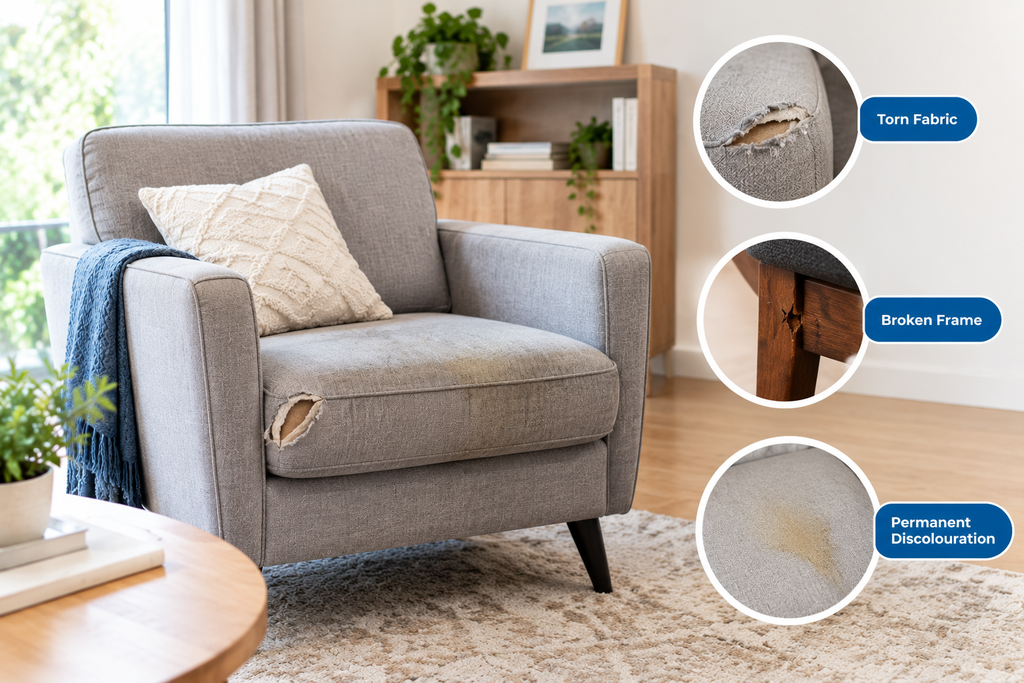
Nevertheless, cleaning cannot repair torn fabric, broken frames or permanent discolouration. If your chairs have visible damage, they may need repair or replacement instead.
Frequently Asked Questions About Dining Chair Cleaning
How Often Should I Clean Dining Chairs?
Remove crumbs and visible spills as needed. Dust hard surfaces regularly and vacuum upholstered chairs according to how often they are used. Busy dining areas may require more frequent care.
Can I Use Water on Fabric Dining Chairs?
That depends on the fabric and its care instructions. Some materials may be damaged by excess moisture. Check the manufacturer’s guidance before using water or a cleaning solution.
How Can I Remove Stubborn Stains From Dining Chairs?
Start by identifying the material and checking its care instructions. Avoid rubbing the stain or applying untested products. If the mark remains, professional upholstery cleaning may be an option.
When Should I Consider Professional Cleaning?
Consider professional help when stains, odours or accumulated dirt remain despite suitable routine care. A professional can assess the material and explain which results may be possible.
Final Thoughts on Dining Chair Cleaning
Keeping dining chairs looking their best does not require complicated routines. Regular dusting, prompt spill treatment and suitable cleaning products can help maintain their appearance.
Most importantly, choose the right method for each material and avoid harsh treatments that could cause damage. With consistent care, you can keep your dining area looking clean and welcoming for everyday meals and special occasions.
Need Professional Upholstery Cleaning?
PEPA Cleaning provides professional sofa and upholstery cleaning across West London. If your upholstered dining chairs need extra attention, get in touch to discuss your requirements and request a free quote.
Phone or WhatsApp: +44 7721 830704
Email: contact@pepacleaning.com
Website: pepacleaning.com
Get in touch today for a free quote.
Leave a Reply