
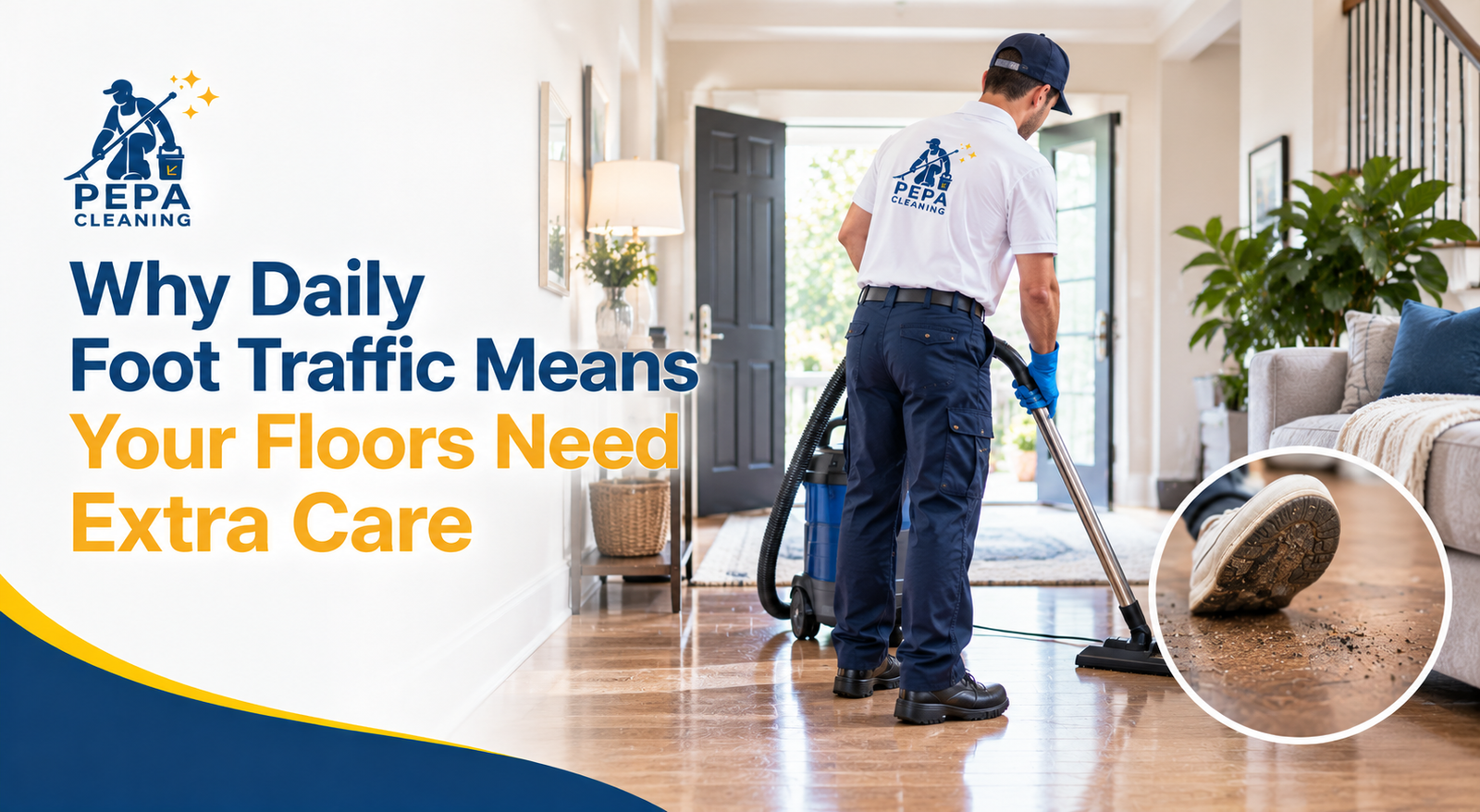
Learn how daily foot traffic affects floors and discover simple ways to protect them from dirt, marks, scratches, moisture, and everyday wear.
Floors deal with constant use every day. People walk across them, move furniture, carry items, and bring outdoor dirt inside. Over time, this regular activity can affect their appearance and condition.
Even when a floor looks clean, small particles can collect in textured areas, gaps, and corners. Therefore, regular care is important for keeping different flooring materials looking their best.
How Does Daily Foot Traffic Affect Floors?
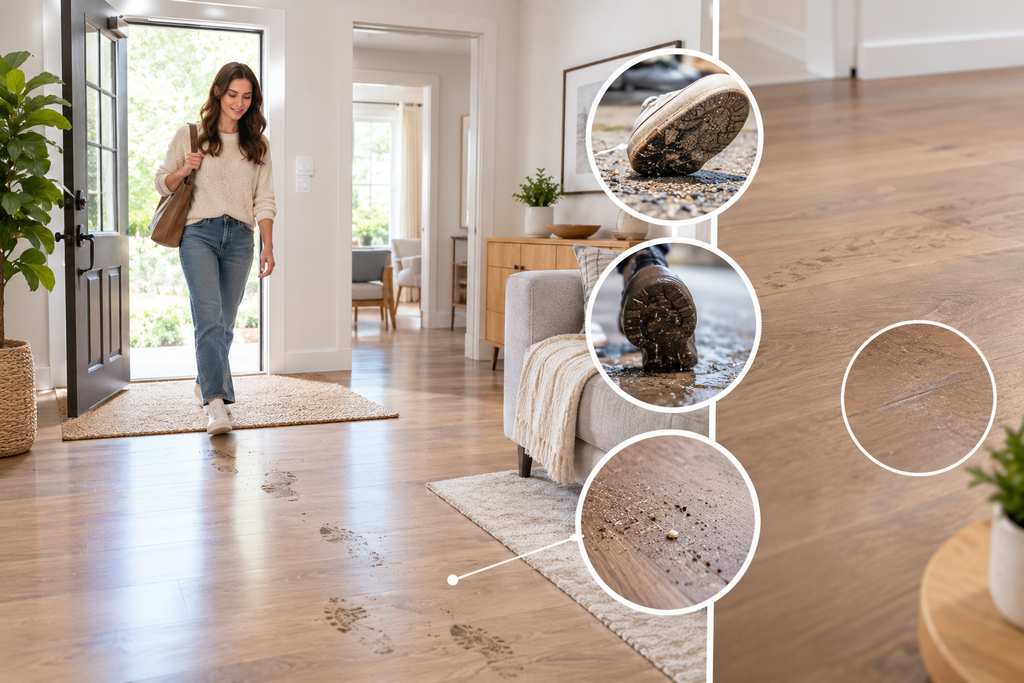
Some areas of your floors naturally receive more foot traffic than others.
Hallways, entrances, stairways, kitchens, and living areas are often used throughout the day. As a result, these floors may show dirt and wear sooner.
Bedrooms and less frequently used rooms may need less frequent attention.
Creating a routine based on how each area is used can make floor maintenance more practical.
1. Dirt Can Build Up in High Traffic Areas
Some areas receive much more use than others. Entrance ways and hallways are common examples.
Because people walk through these areas frequently, dirt can build up faster. Regular vacuuming and mopping can help remove loose debris.
However, some residue may remain around edges, joints, or textured sections. These areas may need more detailed attention from time to time.
2. Grit Can Cause Surface Wear
Small particles of grit can be brought indoors on shoes. Although they may not seem significant, repeated foot traffic can move them across the floor.
This can gradually affect certain finishes, especially when the same areas are used heavily.
For this reason, placing suitable mats near entrances can help reduce the amount of outdoor debris brought inside.
3. Moisture Can Leave Marks
Wet shoes and umbrellas can introduce moisture into entrance areas. If water remains on a surface for too long, it may leave marks or affect certain materials.
Deal with spills and moisture as soon as possible. Also, make sure entrance mats are kept clean and dry.
Good ventilation can help in areas where moisture is a regular concern.
4. Furniture Can Add Extra Pressure
Foot traffic is not the only source of everyday wear. Furniture can also place pressure on flooring.
Chairs and tables may leave marks when moved repeatedly. Heavy items can also create pressure points over time.
Using suitable protective pads under furniture legs can help reduce unnecessary marks. When moving heavy items, lift them where possible instead of dragging them.
5. Different Materials Need Different Care
Not all floors should be treated in the same way. Carpet, wood, stone, vinyl, and other materials have different care requirements.
For example, excessive moisture may not be suitable for certain wooden surfaces. Likewise, some natural stone materials need specific products and methods.
Always check the manufacturer’s instructions before using a new product or treatment on your floors.
6. Regular Care Helps Prevent Heavy Build Up
A simple routine can make a big difference. Vacuuming, sweeping, and mopping can help remove dirt from floors before it becomes difficult to manage.
Pay particular attention to busy areas. These sections may need more frequent care than rooms that receive less use.
As a result, regular floor maintenance can help keep the entire property looking fresher.
7. Some Floors Need Professional Treatment
Routine care is useful, but it cannot always deal with every type of build up. Marks, dull finishes, deep dirt, and other issues may need a more specialised approach.
Professional floor cleaning or polishing can provide deeper treatment for suitable materials. The correct method depends on the type and condition of the flooring.
Therefore, professional care can be useful when routine maintenance is no longer giving you the results you want.
How Can You Reduce Wear From Foot Traffic?

You cannot stop people from walking across your floors. However, a few simple habits can reduce unnecessary wear.
- Place suitable mats near entrances.
- Keep entrance areas free from excess moisture.
- Vacuum or sweep high traffic areas regularly.
- Clean spills quickly.
- Avoid dragging heavy furniture.
- Use suitable protective pads under furniture legs.
- Follow the care instructions for your flooring material.
- Arrange professional treatment when needed.
These simple steps can help reduce the impact of everyday use.
Which Areas Usually Need the Most Attention?
Some areas of your floors naturally receive more foot traffic than others.
Hallways, entrances, stairways, kitchens, and living areas are often used throughout the day. As a result, these floors may show dirt and wear sooner.
Bedrooms and less frequently used rooms may need less frequent attention.
Creating a routine based on how each area is used can make floor maintenance more practical.
When Should You Arrange Professional Floor Care?
Consider professional help when your floors have:
- Deep or stubborn marks
- Heavy dirt build up
- A dull or tired appearance
- Areas of uneven wear
- Stains that routine methods cannot remove
- A finish that needs specialist treatment
Professional care can also be useful before selling or letting a property, after renovation work, or when preparing a property for new occupants.
Conclusion
Daily foot traffic is unavoidable. However, the effects on your floors can be managed with the right routine.
Regular maintenance, entrance mats, quick spill treatment, and careful furniture handling can all help reduce unnecessary wear.
When your floors need more than routine care, a professional service can provide a deeper solution.
PEPA Cleaning provides professional floor cleaning and polishing services across West London. Our team can help care for different flooring types using suitable methods.
Frequently Asked Questions
Why do floors become dirty so quickly?
Daily foot traffic can bring in dust, grit, moisture, and other outdoor particles. High traffic areas therefore tend to become dirty faster.
How can I protect floors from daily foot traffic?
Use suitable entrance mats, clean busy areas regularly, deal with spills quickly, and avoid dragging furniture across the floor.
Can professional floor cleaning remove deep dirt?
Professional treatment can help with certain types of deep dirt and build up. Results depend on the flooring material and its condition.
How often should floors receive professional care?
There is no single schedule for every property. The right frequency depends on the flooring type, level of foot traffic, and overall condition.
Give Your Floors Extra Care with PEPA Cleaning
Daily use can gradually affect the appearance of your floors. With the right maintenance and professional support when needed, you can keep them looking fresh for longer.
PEPA Cleaning provides professional floor cleaning and polishing across West London.
Get in touch today for a free quote.
Phone: +44 7721 830704
Email: contact@pepacleaning.com
Website: pepacleaning.com
Leave a Reply