

Furniture fabrics need different types of care. A cleaning method that works well on one sofa may damage another. That is why understanding how to clean different furniture fabrics is important if you want to keep your chairs, sofas and other upholstered pieces looking their best.
Consequently, everyday use can leave furniture with dust, food crumbs, stains and body oils. Over time, these can affect the appearance and freshness of the material.
Whether you have a velvet sofa, a cotton armchair or a leather dining chair, choosing the right cleaning method can help protect the fabric and extend the life of your furniture.

1. Start by Identifying Your Furniture Fabric
Before cleaning any upholstered furniture, check what material it is made from. Different fabrics react differently to water, cleaning products and friction.
Look for the manufacturer’s care label, which may include cleaning codes such as:
- W: Water-based cleaning products may be suitable.
- S: Solvent-based cleaning products are recommended.
- WS: Water-based or solvent-based products may be suitable.
- X: Vacuuming or professional cleaning is recommended.
Always follow the manufacturer’s instructions. If the label is missing, test a suitable product on a small, hidden area before cleaning the entire surface.
2. Cleaning Cotton Furniture Fabrics Safely
Cotton is a common upholstery material because it feels comfortable and comes in many colours and designs. However, it can absorb spills quickly and may be prone to staining.
For everyday care, vacuum the surface using an upholstery attachment. This helps remove loose dust, crumbs and debris.
If a spill occurs, blot it gently with a clean cloth. Avoid rubbing, as this can push the stain deeper into the fibres.
Before using water or a cleaning solution, check the care label. Excess moisture may cause shrinkage, water marks or other damage.
3. How to Clean Velvet Furniture
Velvet gives furniture a soft and elegant appearance. However, its textured surface needs careful handling to avoid crushing or damaging the fibres.
Use a soft upholstery attachment to remove dust and loose debris. Always vacuum gently and follow the direction of the fabric’s pile where possible.
For small marks, check the manufacturer’s instructions before applying any product. In addition, refrain from soaking the material or scrubbing aggressively.
Professional upholstery cleaning may be a better option for delicate velvet furniture or stubborn stains.
4. Caring for Linen Furniture Fabrics
Linen is known for its natural texture and breathable feel. However, it can wrinkle easily and may absorb liquids quickly.
Regular vacuuming helps prevent dust from settling into the fabric. For spills, gently blot the affected area with a clean, dry cloth.
Avoid excessive water, as it may leave marks or affect the material’s shape. Always check the care label before using a cleaning solution.
5. How to Clean Leather Furniture
Leather furniture can add a stylish finish to a room. Although it is generally easy to wipe down, it still needs suitable care to prevent drying, cracking and surface damage.
Remove loose dust with a soft, dry cloth. For everyday marks, use a cleaning product specifically designed for the type of leather you own.
Avoid harsh household cleaners and excessive water. Conditioning may also help maintain the material, but only use products recommended by the manufacturer.
6. How to Clean Microfibre Furniture
Microfibre is a popular upholstery choice because it is durable and often easier to maintain than some delicate fabrics.
Vacuum regularly to remove dust, pet hair and crumbs. For stains, check the manufacturer’s care instructions before choosing a cleaning product.
Some microfibre materials can be cleaned with water-based solutions, while others require solvent-based products. Using the wrong method may leave marks or affect the finish.
7. How to Clean Synthetic Furniture Fabrics
Synthetic materials such as polyester and nylon are commonly used in upholstered furniture. They are often chosen for their durability and everyday practicality.
Vacuum the furniture regularly to prevent dust and debris from building up. For spills, blot the area promptly and use a suitable upholstery cleaner if the care label allows it.
Although many synthetic fabrics are relatively easy to maintain, they still need the correct cleaning method.
8. Remove Stains Without Damaging the Fabric
Stains can happen even when you take good care of your furniture. Food, drinks, ink and everyday spills can leave marks if they are not handled properly.
Follow these basic steps:
- Remove any loose material without spreading the stain.
- Blot liquid spills using a clean cloth.
- Check the fabric’s care instructions.
- Test the recommended cleaning product in a hidden area.
- Follow the product instructions and avoid using too much liquid.
- Allow the fabric to dry completely.
Never scrub aggressively or mix cleaning chemicals. If the stain is difficult to remove, consider professional assistance.
9. Keep Different Furniture Fabrics Clean With Regular Care
A consistent cleaning routine can help prevent dirt from building up and keep your furniture looking presentable.
Try these simple habits:
- Vacuum upholstered furniture regularly.
- Clean spills as soon as possible.
- Rotate removable cushions when appropriate.
- Keep furniture away from direct sunlight where possible.
- Follow the manufacturer’s care instructions.
- Avoid eating or drinking over delicate upholstery.
- Arrange professional cleaning when needed.
These small steps can help maintain the appearance of different materials and reduce the need for intensive cleaning.
10. Know When to Choose Professional Upholstery Cleaning
Some furniture needs more attention than everyday vacuuming and spot cleaning can provide.
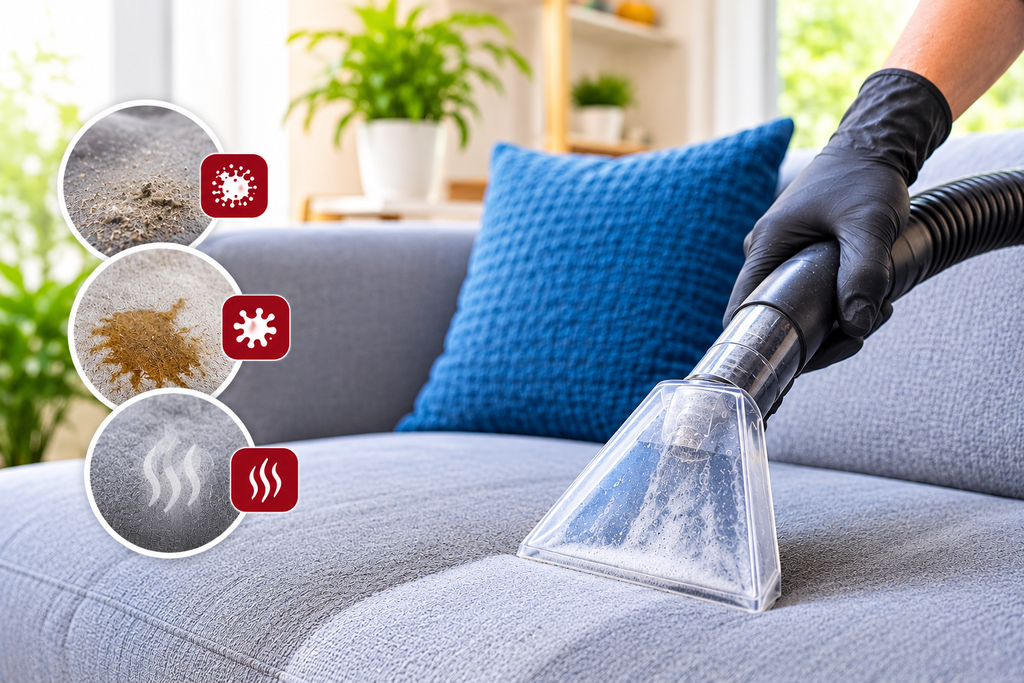
Deeply embedded dirt, stubborn stains and unpleasant odours may require specialist equipment and suitable cleaning solutions.
Professional upholstery cleaners can assess the material and select an appropriate method. This is especially useful for delicate fabrics or furniture with extensive dirt build-up.
Rather than experimenting with different household products, getting professional advice can help reduce the risk of damaging your furniture.
Frequently Asked Questions
Can I use the same cleaning product on every furniture fabric?
No. Different materials have different cleaning requirements. Always check the care label and use a product suitable for the specific fabric.
How often should I clean upholstered furniture?
Vacuuming once a week is a useful starting point for many households. However, furniture used frequently or exposed to pets and children may need more regular attention.
How do I remove a stain from delicate upholstery?
Start by blotting the spill gently and checking the manufacturer’s care instructions. Avoid scrubbing or applying untested products. For stubborn marks, professional cleaning may be safer.
Is professional upholstery cleaning suitable for all furniture fabrics?
Professional cleaners can work with many upholstery materials, but the method depends on the fabric’s condition and care requirements. A proper assessment helps determine the safest approach.
Final Thoughts
Different furniture fabrics need different cleaning methods. Cotton, velvet, linen, leather and synthetic materials all have their own care requirements. Using the wrong product or too much moisture can cause unnecessary damage.
By identifying the material, following its care instructions and maintaining a regular cleaning routine, you can help keep your furniture looking fresh and comfortable.
If your sofas or upholstered chairs need more thorough attention, PEPA Cleaning can help. We provide professional sofa and upholstery cleaning services across West London, using suitable methods for different furniture materials.
Get in touch today for a free quote.
PEPA Cleaning
Phone/WhatsApp: +44 7721 830704
Email: contact@pepacleaning.com
Website: www.pepacleaning.com
If you would rather leave it to the professionals, Pepa Cleaning’s sofa and upholstery cleaning covers Hampton and the surrounding South West London areas — get in touch for a free quote.
Leave a Reply