
Tag: DeepClean

  • Preparing a Home Before a New Baby Arrives

    Preparing a Home Before a New Baby Arrives

    Get your home ready for a new baby with practical cleaning tips for bedrooms, carpets, upholstery, floors, windows, and other important areas.

    Preparing for a new baby involves more than buying clothes and arranging the nursery.

    It is also a good opportunity to look around your home and deal with areas that may have been overlooked. Dust, dirt, built-up residue, and clutter can collect over time, especially in busy parts of the property.

    A thorough cleaning routine can help make the home feel more organised and comfortable before the baby arrives.

    Start With a Simple Cleaning Plan

    Preparing the whole home at once can feel overwhelming.

    Instead, create a simple plan and work through one area at a time. Start with rooms that will be used most often, such as the bedroom, nursery, living room, and bathroom.

    By planning ahead, you can avoid leaving everything until the final weeks.

    Make a list of tasks that need regular attention and those that may require a deeper clean.

    The nursery or sleeping area deserves particular attention.

    Clean floors, shelves, windowsills, cupboards, and other surfaces before arranging baby items. This can help remove built-up dirt from areas that may otherwise be forgotten.

    Wash suitable curtains, bedding, and other fabric items according to their care instructions.

    In addition, avoid overcrowding the room with unnecessary items. A simpler space can be easier to keep tidy.

    Carpets and rugs can collect dust, dirt, hair, and other particles over time.

    This can be particularly noticeable in areas where people walk frequently.

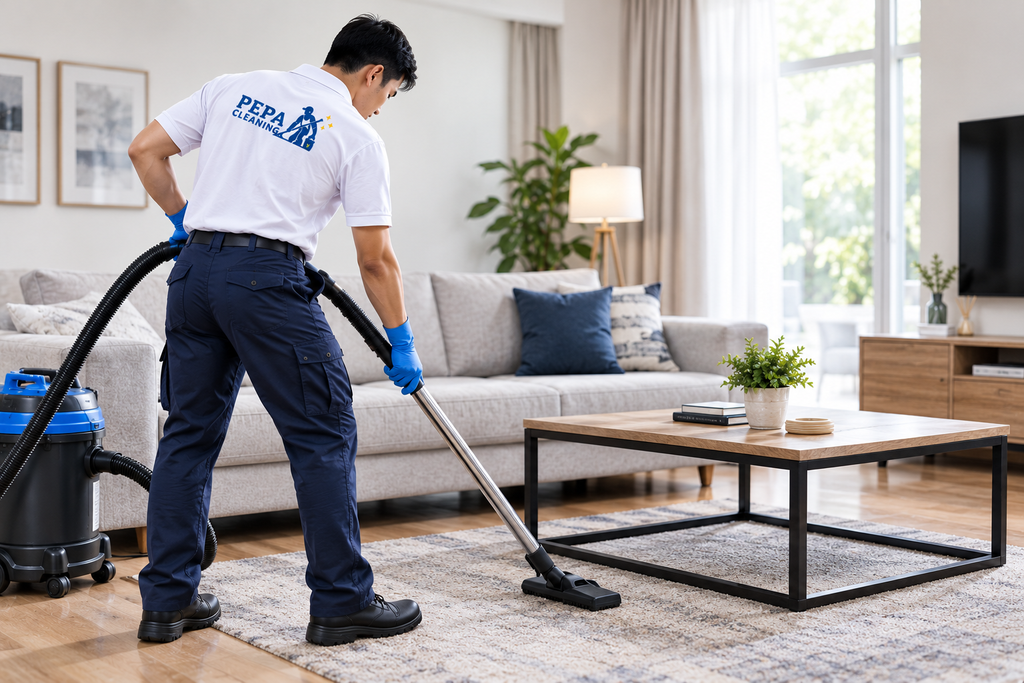
    Regular vacuuming is useful for everyday maintenance. However, carpets and rugs that have built up dirt may benefit from professional treatment.

    Therefore, consider arranging carpet or rug cleaning before the baby arrives if these surfaces need extra attention.

    Sofas and upholstered chairs can also collect dirt through everyday use.

    Food crumbs, hair, dust, and other particles can settle between cushions and along seams.

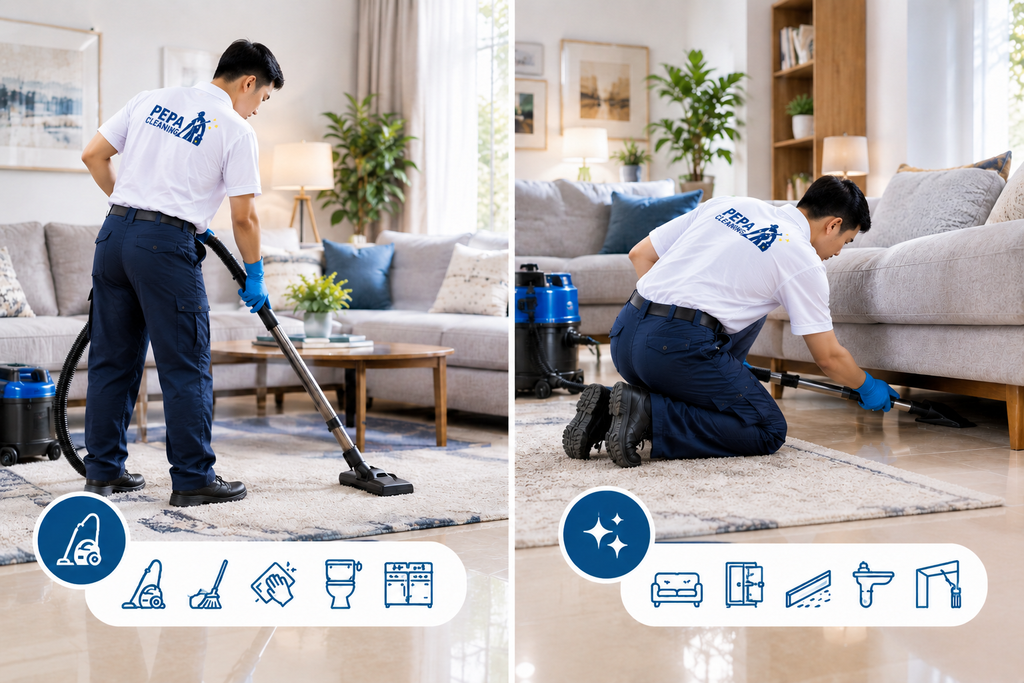
    Remove cushions where possible and vacuum the areas underneath. Follow the manufacturer’s care instructions before using any cleaning products.

    For heavily used upholstery, professional treatment may provide a more thorough clean.

    Floors are among the most frequently used surfaces in a home.

    Hard floors can collect dirt and residue, while carpets can hold particles within their fibres.

    Clean floors according to the type of material. Avoid using products that are unsuitable for the surface.

    If your floors have become dull or heavily marked, professional floor cleaning or polishing may be worth considering.

    Windows are easy to forget when preparing a home.

    Glass can collect marks, while frames, sills, and tracks can hold dirt and debris.

    Look beyond the main surfaces and check areas such as:

    • Window frames
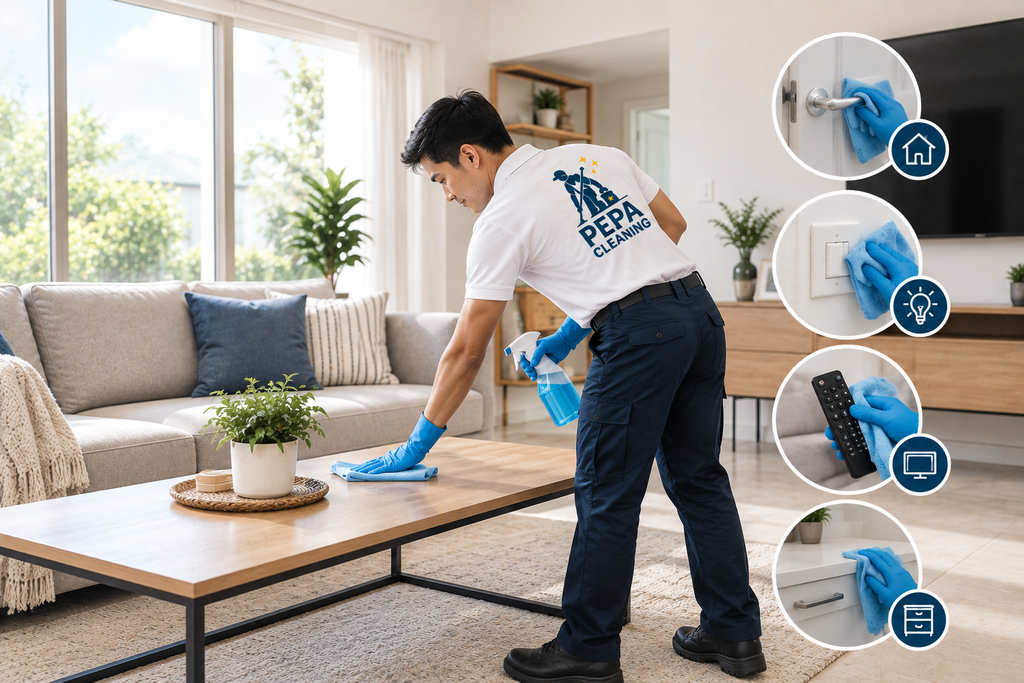
    • Door handles
    • Light switches
    • Skirting boards
    • Shelves
    • Cupboard tops
    • Areas behind furniture

    These small details can make a noticeable difference when preparing the property.

    A new baby can bring plenty of new belongings into the home.

    Before everything arrives, consider sorting items that you no longer use.

    Donate, recycle, sell, or properly dispose of unwanted belongings where appropriate.

    As a result, you can create more space for baby essentials and make everyday maintenance easier.

    The bathroom should also be included in your preparation.

    Clean the sink, toilet, shower, bath, tiles, and other frequently used surfaces.

    Pay attention to corners and areas where soap residue or moisture can build up.

    Regular bathroom cleaning can then help keep the space easier to maintain once the baby arrives.

    Consider Areas That Need Professional Cleaning Help

    Some cleaning tasks are difficult to complete properly without specialist equipment.

    Large carpets, rugs, mattresses, sofas, and hard-to-reach windows may require more time and care than everyday household tasks.

    If you are short on time, professional help can make preparing the property more manageable.

    It can also be useful when several areas need attention at the same time.

    Not every cleaning product is suitable for every surface.

    Always check the manufacturer’s instructions before using a product on carpets, upholstery, flooring, furniture, or other materials.

    Keep cleaning products safely stored away from children.

    Most importantly, follow the instructions on product labels and allow treated surfaces to dry properly.

    Once the baby arrives, your daily routine may change significantly.

    You may have less time for larger household tasks, so simple habits can help.

    Focus on frequently used areas first. Clean spills promptly, keep floors maintained, and deal with clutter before it becomes difficult to manage.

    A realistic routine is often easier to maintain than trying to keep the entire property spotless every day.

    Professional cleaning may be useful before a baby arrives if:

    • Carpets have built-up dirt
    • Rugs need deeper treatment
    • Sofas or upholstery need attention
    • Mattresses require professional care
    • Floors need polishing
    • Windows are difficult to reach
    • The home has been neglected for some time
    • You have limited time before the due date
    • Several rooms need attention at once

    Planning these tasks early can give you more time to focus on other preparations.

    Getting your home ready for a new baby does not mean everything has to be perfect.

    Instead, focus on the areas that matter most and deal with tasks that are difficult to manage later.

    A thorough clean, less clutter, and a simple maintenance routine can help make the home easier to manage after the baby arrives.

    If certain areas need more attention than you can provide yourself, professional cleaning can take some of the work off your hands.

    There is no single ideal time. Starting several weeks before the baby arrives can give you enough time to work through larger tasks without rushing.

    Focus on the nursery, bedroom, living areas, bathroom, floors, carpets, upholstery, windows, and other frequently used spaces.

    If your carpets have built-up dirt, stains, or odours, professional carpet cleaning may be worth considering before the baby arrives.

    Yes. Sofas and other upholstered furniture can collect dirt and particles over time. Follow the manufacturer’s care instructions or consider professional upholstery treatment when needed.

    Yes. Professional cleaners can help with larger tasks such as carpets, upholstery, rugs, mattresses, windows, and hard floors.

    Getting ready for a new baby is already a big task. Professional help can make the household preparation easier.

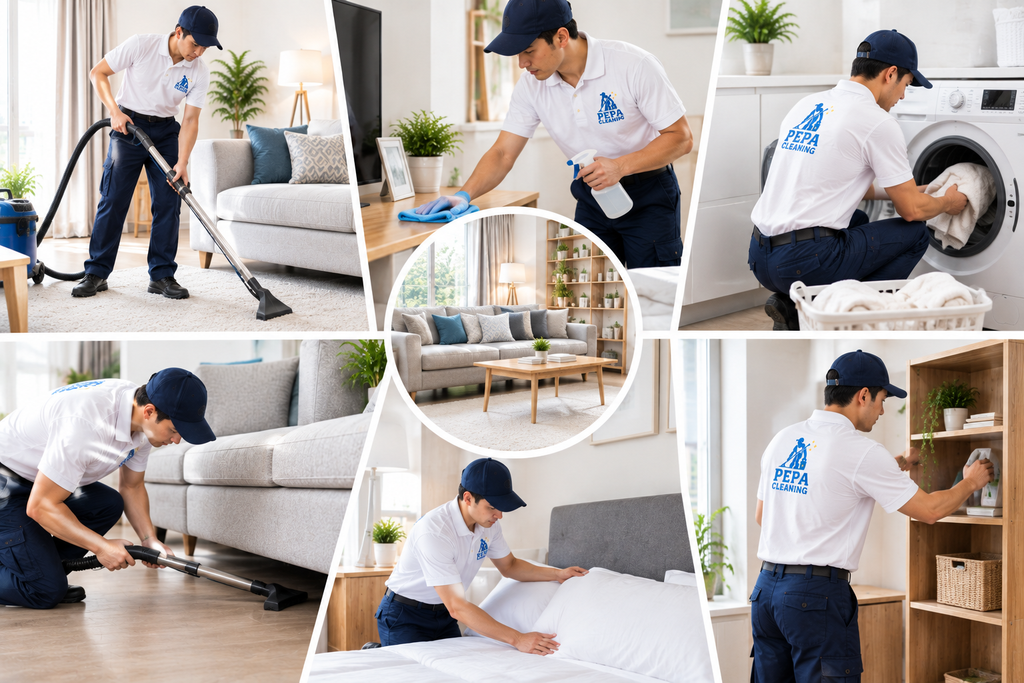
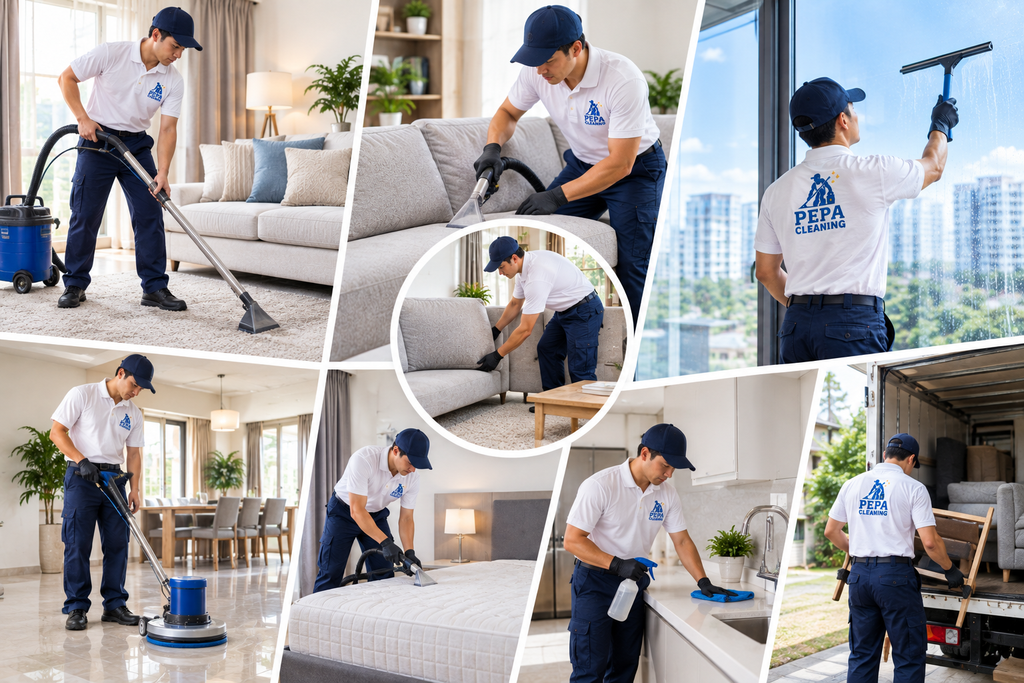
    PEPA Cleaning provides carpet cleaning, sofa and upholstery cleaning, rug and mattress cleaning, window cleaning, hard floor polishing, end of tenancy cleaning, garden maintenance, and waste removal across West London.

    If your home needs extra attention before your new arrival, our team can help.

  • High Humidity? When to Call a Professional Cleaning Team

    High Humidity? When to Call a Professional Cleaning Team

    Learn how high humidity affects your home and when you should seek professional help for mould, musty odours, damp surfaces and hidden build-up.

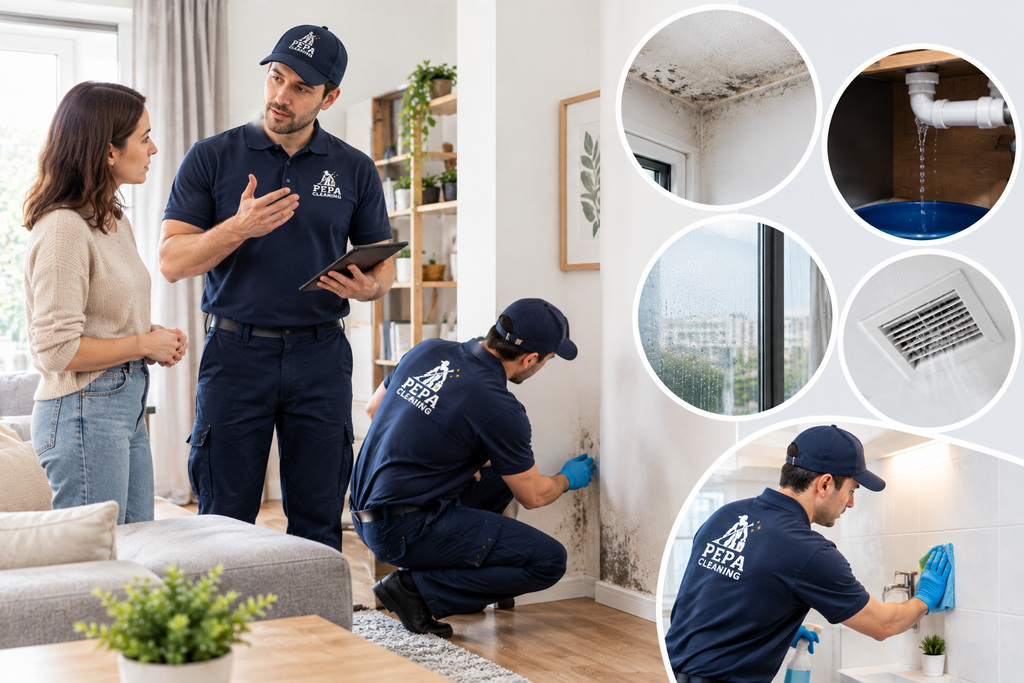
    High humidity can affect more than how comfortable your home feels.

    When moisture remains in the air for long periods, it can contribute to damp surfaces, musty smells, condensation, and unwanted build-up. Leaving moisture untreated makes some problems harder to manage.

    Regular household cleaning can help with everyday maintenance. If certain signs appear, seek professional help.

    High Humidity? When to Call a Professional Cleaning Team

    Humidity refers to the amount of moisture in the air.

    When indoor humidity remains high, moisture can settle on cooler surfaces such as windows, walls, and other areas around the home.

    Over time, this can create conditions where mould and mildew may develop.

    For this reason, it is important to pay attention to recurring moisture rather than simply wiping surfaces when they become wet.

    A musty smell may be a sign that moisture has been building up somewhere in the property.

    You may notice the odour in bedrooms, bathrooms, cupboards, carpets, or other enclosed areas.

    If the smell returns soon after you clean the area, there may be an underlying source that needs attention.

    In this situation, professional help can be useful for identifying and treating affected surfaces.

    Small patches of mould can sometimes develop in damp areas.

    However, we have not yet addressed the underlying moisture problem, as suggested by recurring growth.

    Mould can appear around windows, bathroom surfaces, walls, fabrics, and other areas exposed to moisture.

    If growth keeps returning, avoid simply cleaning the visible patch repeatedly. Consider getting professional advice and addressing the source of the moisture.

    Carpets can hold moisture longer than hard surfaces.

    When humidity is high, carpets may develop a damp smell or feel different underfoot.

    Moisture can also contribute to conditions that allow unwanted build-up to develop within carpet fibres.

    Professional carpet treatment may be appropriate when the problem persists or a carpet has been affected by prolonged moisture.

    Sofas, chairs, mattresses, and other fabric furnishings can absorb moisture.

    Because these materials are thicker than many hard surfaces, they may take longer to dry.

    A persistent damp smell can therefore be difficult to remove with ordinary surface cleaning.

    Professional upholstery or mattress treatment may help when moisture-related odours have become difficult to manage.

    Condensation is common when warm, moist air comes into contact with cooler surfaces.

    A small amount may not be unusual. However, frequent condensation around windows and walls should not be ignored.

    Wipe away visible moisture and improve ventilation where possible.

    At the same time, check whether the problem continues. Persistent condensation may require further investigation.

    Some moisture-related problems develop in places that are easy to overlook.

    These can include spaces behind furniture, underneath carpets, inside cupboards, around window frames, and in other poorly ventilated areas.

    Because these spaces are difficult to access, problems may remain unnoticed for longer.

    A professional service can help clean affected surfaces and identify areas that need closer attention.

    Regular cleaning cannot solve every moisture problem.

    If your home continues to feel damp despite routine maintenance, the issue may involve ventilation, condensation, leaks, or another source of moisture.

    Cleaning the visible surfaces may improve their appearance, but it may not address the underlying cause.

    In this situation, consider contacting an appropriate professional who can assess the moisture issue.

    Professional cleaning may be worth considering when:

    • Musty smells keep returning
    • Mould or mildew repeatedly appears
    • Carpets have developed damp odours
    • Upholstery smells musty
    • Moisture has affected fabric surfaces
    • Damp areas are difficult to reach
    • A property has been closed for a long period
    • A room has poor ventilation
    • You need a deeper clean after a moisture problem

    In these situations, professional equipment and experience can make the cleaning process more thorough.

    High Humidity? When to Call a Professional Cleaning Team

    Cleaning can help remove dirt, build-up, and some surface contamination.

    However, it cannot always solve the source of high humidity.

    If moisture is caused by poor ventilation, a leak, condensation, or another building-related issue, that source needs to be addressed separately.

    Therefore, professional cleaning should be viewed as part of the solution rather than a replacement for fixing the underlying moisture problem.

    There are several simple steps that may help manage indoor moisture.

    Open windows when appropriate and use extractor fans in kitchens and bathrooms. Avoid drying large amounts of laundry indoors when possible.

    You should also allow damp areas to dry properly and avoid blocking ventilation points.

    Most importantly, monitor areas where condensation frequently appears.

    If the problem continues, consider getting professional advice.

    Moisture can affect surfaces in different ways.

    Carpets, rugs, sofas, mattresses, and other fabrics may require specific treatment depending on their condition.

    A professional team can assess the material before choosing an appropriate method.

    As a result, you can avoid using unsuitable products or methods that may damage delicate surfaces.

    High humidity should not be ignored when it starts affecting your property.

    Recurring musty smells, mould, damp carpets, condensation, and moisture-related odours can all be signs that an area needs closer attention.

    Regular maintenance can help, but some problems require professional intervention.

    If moisture has affected carpets, upholstery, mattresses, or other surfaces, professional cleaning may help restore them and make the property easier to maintain.

    At the same time, remember that the underlying source of excess moisture should also be addressed.

    High humidity can create damp conditions that support mould growth. However, the cause of moisture should also be addressed to prevent the problem from returning.

    Moisture can contribute to musty odours, particularly in enclosed spaces, carpets, upholstery, and other absorbent materials.

    Professional treatment can help remove odours and built-up dirt from suitable surfaces. However, the source of excess moisture should also be identified and addressed.

    Small surface areas may sometimes be handled according to appropriate guidance. However, recurring, extensive, or difficult-to-reach mould should be assessed by a suitable professional.

    Consider professional help when moisture has affected carpets, upholstery, mattresses, or other surfaces, or when musty smells and build-up keep returning despite regular cleaning.

    High humidity can make certain cleaning problems more difficult to manage.

    PEPA Cleaning provides professional carpet cleaning, sofa and upholstery cleaning, rug and mattress cleaning, window cleaning, hard floor polishing, end of tenancy cleaning, garden maintenance, and waste removal across West London.

    If moisture has left your carpets, upholstery, rugs, or mattresses with persistent odours or built-up dirt, our team can help.

  • Why Professional Cleaning Goes Beyond What You See

    Why Professional Cleaning Goes Beyond What You See

    Discover why professional cleaning goes beyond visible dirt, including hidden build-up in carpets, upholstery, floors, windows, and hard-to-reach areas.

    A home can look clean while still needing more attention.

    Visible surfaces may appear tidy, but dirt, dust, and build-up can collect in places that are easy to overlook. Carpets, upholstery, floors, windows, and other areas can all require more detailed care.

    This is where specialist care can make a difference.

    Rather than focusing only on what you can see, a thorough approach considers the less noticeable areas of a property.

    A professional service is more than simply wiping surfaces and removing visible dirt.

    A trained cleaning team can assess different materials and areas of a property before choosing suitable cleaning methods.

    For example, carpets may require specialist equipment, while upholstery may need a different treatment.

    The aim is to clean surfaces carefully while protecting them from unnecessary damage.

    Why Professional Cleaning Goes Beyond What You See

    Some dirt is easy to see. Other build-up can remain hidden.

    Dust and debris may collect under furniture, between sofa cushions, inside carpet fibres, and around corners.

    As a result, a quick surface clean may not always provide the same result as a more detailed cleaning process.

    Professional equipment can help reach areas that are difficult to clean using everyday household tools.

    Vacuuming is useful for regular maintenance.

    However, carpets can hold dirt and particles deep within their fibres. Heavy foot traffic can also leave marks and build-up over time.

    Therefore, a professional carpet service can provide a deeper treatment. when a carpet needs more than routine vacuuming.

    This can be particularly useful for heavily used areas, rental properties, and carpets that have not been professionally cleaned for some time.

    Sofas and upholstered chairs can collect dirt through everyday use.

    Food crumbs, hair, dust, and other particles can settle between cushions and along seams.

    For this reason, regular vacuuming is helpful, but some fabric surfaces may need more detailed treatment.

    Specialist upholstery care can help remove built-up dirt while using methods suitable for the material.

    Floors receive constant use.

    Over time, they can develop marks, dull areas, and built-up residue that regular mopping may not completely remove.

    Depending on the flooring, a specialist treatment or floor polishing may help improve its appearance and condition.

    The correct method is important because different flooring materials require different types of care.

    Clean windows can make a room feel brighter.

    However, windows also include frames, sills, tracks, and other areas where dirt can collect.

    Consequently, a professional window service can provide a more detailed result than simply wiping the glass.

    For large or difficult-to-reach windows, professional equipment can also make the job safer and more efficient.

    Why Professional Cleaning Goes Beyond What You See

    Some areas are simply difficult to access.

    Spaces behind furniture, underneath cabinets, high windows, and narrow corners may receive little attention during everyday cleaning.

    Over time, these areas can collect dirt and debris.

    A thorough service can help target overlooked spaces and make the overall property feel more thoroughly maintained.

    Regular household cleaning is important. However, some jobs require more time, equipment, or specialist knowledge.

    Professional cleaners can work with different surfaces and use appropriate methods for each area.

    In addition, professional services can save you time when you need to prepare a property for a specific occasion.

    This can be helpful before moving into a new property, preparing for tenants, selling a home, or dealing with heavily used areas.

    Professional help can be useful when:

    • Your home needs a deeper clean
    • Carpets have heavy dirt or stains
    • Sofas and upholstery need detailed care
    • Floors have become dull or marked
    • Windows are difficult to reach
    • You are preparing a rental property
    • You are moving in or moving out
    • You have limited time for cleaning
    • Certain areas have been neglected for a long time

    In these situations, professional help can make property care easier and more manageable.

    A property does not have to look extremely dirty before it needs professional attention.

    Sometimes, the areas that need cleaning most are the ones you cannot easily see.

    By dealing with hidden build-up, you can help maintain carpets, upholstery, floors, windows, and other surfaces for longer.

    A regular professional help schedule can also make larger cleaning tasks easier to manage.

    Professional help goes beyond making a property look tidy.

    It focuses on areas where dirt, dust, and build-up can collect, including carpets, upholstery, floors, windows, and hard-to-reach spaces.

    Most importantly, professional help can provide a deeper level of care when everyday maintenance is no longer enough.

    If certain areas of your property are difficult to clean yourself, professional support can save time and help you achieve a more thorough result.

    Regular cleaning usually focuses on everyday maintenance. Professional help can involve specialist equipment, techniques, and more detailed attention to difficult areas.

    Professional help can help remove dirt and build-up from areas that may be difficult to reach with standard household cleaning tools.

    Regular vacuuming is important, but professional carpet cleaning can provide a deeper treatment when carpets have accumulated heavy dirt or require specialist care.

    Yes. Professional upholstery cleaners can help maintain suitable fabric surfaces and remove built-up dirt, depending on the material and manufacturer’s care instructions.

    Consider professional help when your property needs a deeper clean, you are moving, preparing a rental property, or do not have enough time to handle larger tasks yourself.

    Some cleaning problems cannot be solved with a quick wipe or regular vacuuming.

    PEPA Cleaning provides professional carpet cleaning, sofa and upholstery cleaning, rug and mattress cleaning, window cleaning, hard floor polishing, end of tenancy cleaning, garden maintenance, and waste removal across West London.

    If your property needs more than surface-level care, our team can help.

  • 7 Overlooked Sources of Dust in Your Airbnb

    7 Overlooked Sources of Dust in Your Airbnb

    Discover 7 hidden sources of dust in your home, from carpets and curtains to furniture, vents, and hard-to-reach areas that are easy to overlook.

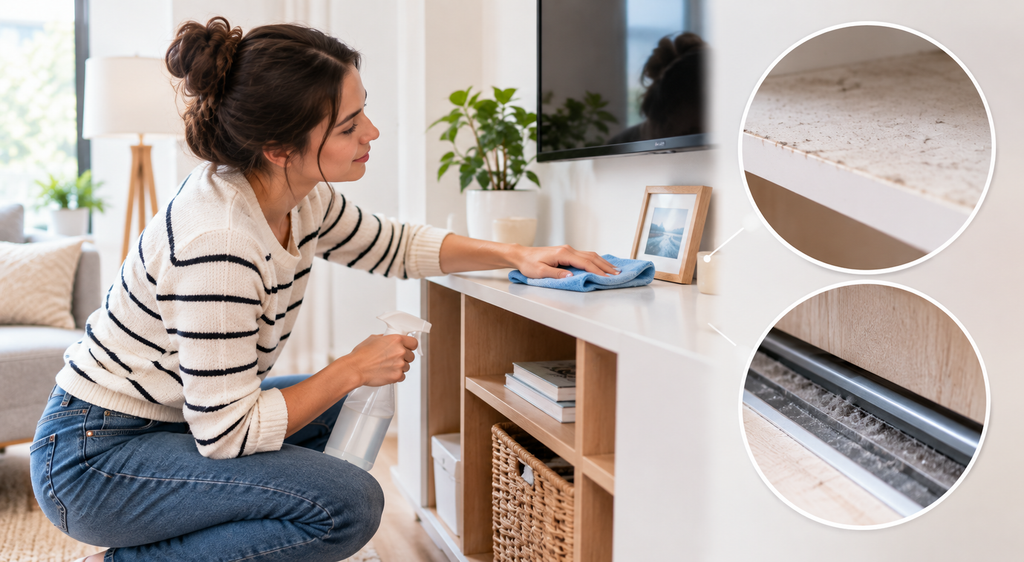
    Dust can appear even when your home looks clean. Small particles can settle on surfaces, collect in fabrics, and build up in areas that are rarely cleaned.

    Particles of dust settle on surfaces, gather in fabrics, and slowly build up in areas not often cleaned. As a result, some parts of your home may need more attention than others.

    Regular cleaning can help keep these areas under control. However, knowing where to look is the first step.

    We consider seven hidden sources worth checking.

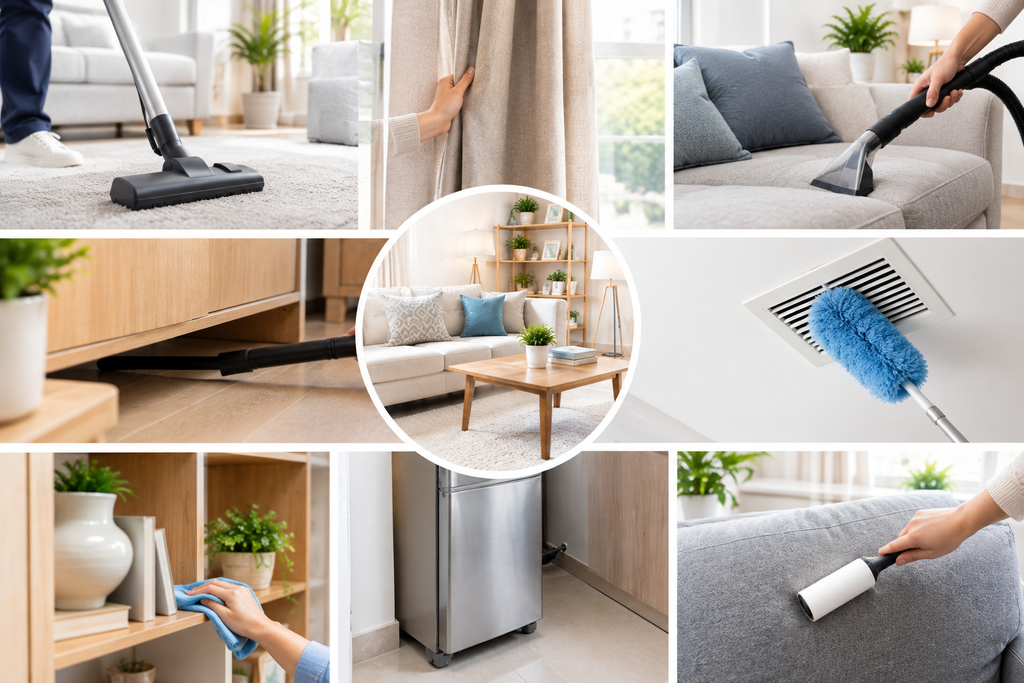
    Carpets and rugs can trap dust deep within their fibres.

    Regular vacuuming helps remove surface debris. However, it may not remove everything that becomes trapped underneath.

    Over time, carpets can collect dirt, hair, and other particles from everyday use.

    Professional carpet and rug cleaning can provide a deeper clean when these surfaces have built up dirt.

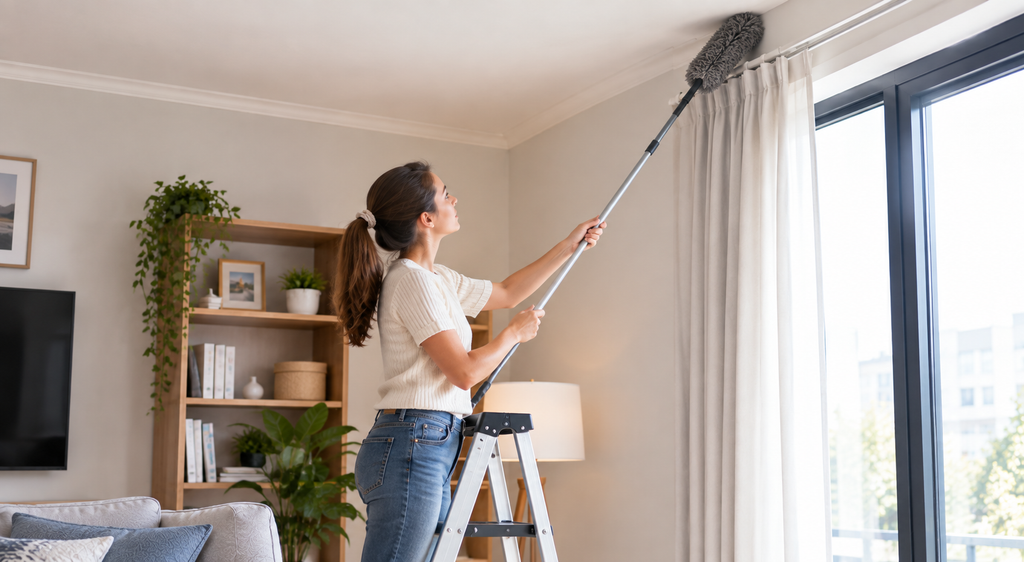
    During routine cleaning, we frequently overlook window coverings.

    Curtains can collect particles as they hang in rooms, while blinds can develop a layer of build-up on their surfaces.

    Therefore, include curtains and blinds in your regular cleaning routine. Follow the care instructions for each material to avoid damage.

    Your sofa may look clean while still holding dust between cushions and along seams.

    Upholstered chairs can have the same problem, particularly in homes where furniture is used every day.

    For this reason, vacuum these areas regularly and check underneath cushions.

    Professional upholstery cleaning can also help remove built-up dirt from suitable fabric surfaces.

    Some of the easiest places to overlook are underneath large furniture.

    Beds, sofas, cabinets, and wardrobes can create spaces where particles collect over time.

    Whenever it is safe to do so, move smaller pieces of furniture and clean underneath them.

    These areas may need extra attention because they are not always reached during normal cleaning.

    Air vents and grilles can collect particles as air passes through them.

    If these areas are rarely cleaned, build-up can become noticeable around the edges and surfaces.

    As a result, check accessible vents and grilles regularly and clean them according to the manufacturer’s instructions.

    For air conditioning systems, specialist servicing may be required for internal components.

    Open shelves can collect particles from the surrounding room.

    Books, ornaments, picture frames, and other decorative items can also hold build-up on their surfaces.

    Instead of only wiping the shelf, clean the objects sitting on it as well.

    This can help prevent particles from simply being moved from one surface to another.

    The spaces behind large appliances and cabinets are easy to forget.

    Kitchen appliances, refrigerators, washing machines, and cabinets can leave narrow gaps where dirt and debris collect.

    When possible, clean these areas safely as part of your deeper cleaning routine.

    Avoid moving heavy appliances without suitable help.

    7 Hidden Sources of Dust You Shouldn't Ignore

    You do not need to deep clean every part of your home every day.

    Instead, create a simple routine that covers frequently used areas and less visible spaces.

    Regular vacuuming, wiping surfaces, washing suitable fabrics, and cleaning underneath furniture can all help.

    In addition, reducing clutter can make it easier to reach surfaces and keep rooms tidy.

    Some dust build-up is unavoidable in a lived-in home.

    However, regular cleaning can prevent it from becoming excessive.

    For example, vacuuming carpets regularly can remove surface debris before it becomes deeply embedded. Cleaning upholstery and curtains can also help keep fabric surfaces fresher.

    A consistent routine is usually easier than waiting until every area needs a major clean.

    Some areas are difficult to clean thoroughly without specialist equipment.

    Carpets, rugs, mattresses, sofas, and other fabric surfaces can hold dirt deep within their fibres.

    In these situations, professional cleaning can provide a deeper clean than everyday household maintenance.

    Professional help can also be useful when you are preparing a property for new tenants, selling your home, or dealing with dust and dirt that have built up over a long time.

    7 Hidden Sources of Dust You Shouldn't Ignore

    Dust can collect in many places that are easy to overlook.

    Carpets, curtains, sofas, furniture gaps, vents, shelves, and spaces behind appliances can all require additional attention.

    By including these areas in your cleaning routine, you can help keep your home cleaner and easier to maintain.

    When certain surfaces are difficult to clean yourself, professional services can help remove built-up dust and dirt more thoroughly.

    Common sources include carpets, rugs, curtains, upholstered furniture, shelves, furniture gaps, vents, and spaces behind large appliances.

    The ideal frequency depends on the area and how much it is used. Frequently used surfaces may need weekly attention, while less accessible areas can be included in a deeper cleaning routine.

    Yes. Carpet fibres can trap dirt, hair, and other particles. Regular vacuuming and occasional professional cleaning can help keep them cleaner.

    Vacuum regularly, clean soft furnishings, wipe surfaces, wash suitable fabrics, and pay attention to hidden areas such as underneath furniture.

    Yes. Professional carpet, rug, upholstery, and mattress cleaning can help remove built-up dirt from surfaces that are difficult to clean thoroughly at home.

    Some areas need more than a quick clean.

    PEPA Cleaning provides professional carpet cleaning, sofa and upholstery cleaning, rug and mattress cleaning, window cleaning, hard floor polishing, end of tenancy cleaning, garden maintenance, and waste removal across West London.

    If hidden build-up has become difficult to manage, our team can help.

  • 7 Hidden Cleaning Problems to Fix Before Moving Out

    7 Hidden Cleaning Problems to Fix Before Moving Out

    Discover 7 hidden cleaning problems to fix before moving out, from neglected floors and windows to kitchen grease, bathroom build-up, and forgotten areas.

    Moving out involves more than packing your belongings.

    As you hand back the keys, check the areas you might have overlooked during your normal cleaning routine. Small marks, built-up dirt, and neglected spaces can become more noticeable once the property is empty.

    A detailed clean can also help leave the property in better condition for the next occupants.

    Here are seven cleaning problems worth checking before you move out.

    7 Hidden Cleaning Problems to Fix Before Moving Out

    Large furniture can hide dirt for months.

    Dust, crumbs, hair, and other debris can collect underneath beds, sofas, wardrobes, and cabinets.

    Before moving out, check these areas and clean them where possible. Moving furniture enables you to identify marks or damage that could be hidden previously.

    Kitchen surfaces can collect grease over time.

    The area around the cooker, extractor hood, splashback, cupboards, and appliances may need more attention than normal.

    Therefore, wipe these areas carefully and check for sticky residue or built-up marks.

    Do not forget cupboard handles and the spaces around frequently used appliances.

    Bathrooms can develop soap residue, water marks, and limescale.

    These problems may be especially noticeable around taps, shower screens, tiles, sinks, and other wet areas.

    As a result, give the bathroom a more detailed clean before leaving.

    Check corners and areas behind fixtures as well. You can easily miss these spaces during routine cleaning.

    Walls and doors can collect marks through everyday use.

    Light switches, door handles, skirting boards, and areas around doorways may become discoloured or dirty.

    Before moving out, inspect these areas carefully.

    Where appropriate, clean marks using a suitable method for the surface. Avoid using harsh products that could damage paint or finishes.

    Floors receive constant use, so they can show signs of dirt by the time you move out.

    Carpets may contain trapped dirt, while hard floors can develop marks and dull areas.

    Regular vacuuming can help with everyday maintenance. However, heavily used carpets may benefit from professional carpet cleaning before the property is handed back.

    Hard floors may also require more detailed cleaning or polishing depending on their condition.

    Windows are easy to overlook when you are busy packing.

    However, glass can collect fingerprints, marks, and outside dirt. Window frames and tracks can also hold debris.

    For this reason, include windows in your moving-out cleaning checklist.

    Clean accessible areas carefully and pay attention to frames, sills, and tracks.

    For large or difficult-to-reach windows, professional window cleaning can make the job easier.

    People often forget cupboards, wardrobes, drawers, and storage spaces during a final clean.

    Once your belongings have been removed, these areas become much easier to inspect.

    Take the opportunity to empty and wipe shelves, drawers, and cupboards.

    Check garages, sheds, and other storage areas too. Leaving unwanted belongings behind can create extra work for the next occupant.

    7 Hidden Cleaning Problems to Fix Before Moving Out

    A property can look clean at first glance while still having hidden areas that need attention.

    Once furniture and personal belongings are removed, marks and dirt can become much easier to see.

    Therefore, completing a detailed clean before moving out can help you leave the property in a more presentable condition.

    It can also save you from rushing through overlooked areas at the last minute.

    A checklist can make the process easier.

    Before leaving, check:

    • Kitchen surfaces and appliances
    • Cupboards and drawers
    • Bathroom fixtures
    • Carpets and floors
    • Windows and frames
    • Doors and handles
    • Skirting boards
    • Areas behind furniture
    • Wardrobes and storage spaces
    • Outdoor areas and rubbish

    By checking each area systematically, you are less likely to forget something important.

    Moving can be stressful enough without having to deep clean the entire property yourself.

    Professional cleaning can be useful when you have limited time, a large property, or areas that need specialist attention.

    It can also help when the property has accumulated heavy dirt or has not been thoroughly cleaned for some time.

    For example, professional carpet cleaning, window cleaning, or an end of tenancy clean can help prepare the property before the final inspection.

    Moving out is a busy process. Cleaning can easily become something you leave until the last minute.

    However, hidden dirt can be found in many places, including behind furniture, inside cupboards, around kitchen appliances, and in bathroom corners.

    By checking these areas before you leave, you can make the final clean more thorough and manageable.

    If you do not have enough time to handle everything yourself, professional cleaning can provide useful support.

    Focus on kitchens, bathrooms, floors, carpets, windows, cupboards, doors, storage areas, and spaces that were hidden behind furniture.

    If carpets are heavily used or visibly dirty, professional carpet cleaning can help improve their condition before you leave.

    Yes. Empty cupboards, wardrobes, and drawers can collect dust and debris, so they should be checked during the final clean.

    It is a good idea to clean accessible windows, frames, sills, and tracks. Professional window cleaning can help with larger or difficult-to-reach areas.

    It can be useful if you are short on time or want a more detailed clean before handing back the property.

    Moving out is already a busy process. Let PEPA Cleaning help with the final clean.

    We provide end of tenancy cleaning services across West London, along with carpet cleaning, sofa and upholstery cleaning, rug and mattress cleaning, window cleaning, hard floor polishing, garden maintenance, and waste removal.

    Whether you are preparing a rental property for inspection or simply want to leave your old home clean and presentable, our team can help.

  • How to Keep Household Waste Under Control

    How to Keep Household Waste Under Control

    Learn simple ways to manage household waste, reduce clutter, sort unwanted items, recycle where possible, and keep your property cleaner.

    Household rubbish can build up faster than expected. Food packaging, old furniture, garden cuttings, broken items, and everyday discarded materials can quickly take over your home.

    Poor waste management can make rooms feel cluttered and harder to maintain. As a result, cleaning may also become more time-consuming.

    Fortunately, a few simple habits can help you stay organised. By sorting items regularly and dealing with unwanted materials early, you can keep your home cleaner, tidier, and easier to manage.

    Simple Ways to Manage Waste at Home

    The first step is to understand what you need to get rid of.

    Instead of putting everything into one bag, separate items based on their type.

    For example, you may have:

    • General rubbish
    • Recyclable materials
    • Food waste
    • Garden waste
    • Unwanted furniture
    • Items that can be donated
    • Items that need specialist disposal

    As a result, sorting items early can make the rest of the process much easier.

    One of the easiest ways to manage household rubbish is to avoid creating more than necessary.

    Before buying something new, consider whether you really need it. Choose reusable products where practical and avoid purchasing more than you can use.

    Similarly, plan your meals carefully to avoid buying food that may go unused. Store leftovers properly and use them before they spoil.

    Small changes may not seem significant at first. However, simple habits like these can help reduce the amount of rubbish produced over time.

    Food scraps can quickly create unpleasant smells and attract pests if they are left for too long.

    Store food properly and check your fridge regularly. This can help you use products before they expire.

    When possible, separate food scraps from other household rubbish according to your local collection rules.

    In addition, avoid putting liquids or loose food into general rubbish bags, as this can cause leaks and make them harder to handle.

    Many everyday items may be recyclable.

    Depending on your local collection service, this can include paper, cardboard, glass, metal, and certain types of plastic.

    However, recycling rules can vary between councils. Always check local guidance before putting an item into a recycling container.

    Flattening cardboard boxes can also help save space.

    Gardens can produce a surprising amount of greenery and garden debris.

    Grass cuttings, fallen leaves, branches, and unwanted plants can quickly fill bags or outdoor storage areas.

    Therefore, clear garden waste regularly rather than allowing it to build up.

    Some materials may be suitable for composting or local garden waste collection.

    If a garden has become heavily overgrown, professional garden maintenance can also make the clearing process easier.

    Old furniture can be difficult to manage because it is often large and heavy.

    A broken sofa, damaged table, or unused wardrobe can quickly take up valuable space.

    Before throwing anything away, consider whether it can be sold, donated, reused, or recycled.

    If an item is no longer suitable for use, check your local disposal options.

    For large or bulky items, professional waste removal can save time and effort.

    Bags, boxes, and unwanted items should not be left in areas where people need to walk.

    Cluttered hallways, stairs, and entrances can make a property harder to move around safely.

    For this reason, move waste to a suitable storage or collection area as soon as possible.

    Keeping these spaces clear can also make regular cleaning much easier.

    You do not need to wait until waste becomes overwhelming.

    Instead, set aside a small amount of time each week to check cupboards, storage areas, garages, and outdoor spaces.

    Look for items that are no longer needed.

    By dealing with unwanted items regularly, you can prevent large piles from developing.

    Not every item should be placed in a normal rubbish bin.

    Electrical items, chemicals, batteries, and other materials may require special disposal.

    Therefore, check local guidance before throwing away anything that could require specialist handling.

    If you are unsure, contact your local council or an appropriate waste service.

    Waste management and decluttering can work together.

    When clearing a room, separate things into items to keep, donate, sell, recycle, and dispose of.

    This makes the process more organised and helps prevent useful items from being thrown away unnecessarily.

    It can also create more space around your home.

    Sometimes the amount of unwanted material becomes too much to handle yourself.

    Professional removal services can be useful when you are:

    • Clearing a garage
    • Removing old furniture
    • Preparing a property for sale
    • Moving home
    • Clearing an overgrown garden
    • Renovating a room
    • Emptying a property
    • Dealing with a large amount of unwanted rubbish

    In these situations, professional help can save time and make the process more manageable.

    Large amounts of unwanted belongings can take time to sort, carry, and transport.

    A professional team can help remove unwanted items from your property and handle the clearing process more efficiently.

    This can be particularly useful when heavy furniture or large amounts of rubbish are involved.

    As a result, you can focus on organising the rest of your property instead of dealing with every unwanted item yourself.

    Simple Ways to Manage Waste at Home

    Managing waste does not have to be complicated.

    Start by sorting items, reducing unnecessary purchases, recycling where possible, and dealing with unwanted materials regularly.

    Most importantly, do not allow rubbish, furniture, or garden waste to build up for too long.

    When the amount becomes difficult to manage, professional waste removal can provide a convenient solution.

    A simple routine can help keep your home more organised, reduce clutter, and make everyday cleaning easier.

    Start by separating general rubbish, recyclable materials, food waste, garden waste, and unwanted items. Then, deal with each type according to local disposal guidance.

    Buy only what you need, choose reusable products where practical, plan meals carefully, and donate or reuse suitable items instead of throwing them away.

    If furniture is still usable, consider selling or donating it. Damaged pieces may need recycling or appropriate disposal.

    Some garden materials may be composted or collected through local garden waste services. Check your local council’s rules for specific guidance.

    Professional waste removal can be useful when you have bulky furniture, large amounts of rubbish, an overgrown garden, or waste that is difficult to transport yourself.

    Keeping unwanted items under control can make your home easier to clean and organise.

    PEPA Cleaning provides removal and clearing services across West London. Our team can help with unwanted furniture, household rubbish, garden cuttings, and other clearing needs, depending on the service required.

    We also provide garden maintenance, carpet cleaning, window cleaning, sofa and upholstery cleaning, hard floor polishing, and end of tenancy cleaning.

  • Simple Ways to Make Your Home Cleaner and Safer

    Simple Ways to Make Your Home Cleaner and Safer

    Discover simple ways to keep your home cleaner and safer, from reducing clutter to maintaining floors, carpets, windows, bathrooms, and more.

    A clean home can feel more comfortable and easier to manage. It can also help reduce everyday dirt, clutter, and potential hazards.

    However, keeping every part of your home clean can be difficult when you have a busy schedule.

    Fortunately, small habits can make a noticeable difference. You do not need to spend hours cleaning every day. Instead, focus on the areas that receive the most use and deal with small problems before they become bigger ones.

    Simple Ways to Make Your Home Cleaner and Safer

    Floors collect dirt, hair, crumbs, and other debris throughout the day.

    Regular vacuuming and mopping can help keep these areas cleaner. In addition, keeping floors clear of clutter can reduce the chance of trips and falls.

    Pay extra attention to busy areas such as hallways, kitchens, and entrances.

    If your floors have become dull or heavily marked, professional floor polishing may also help improve their appearance.

    Clutter can make rooms harder to clean. It can also create obstacles around your home.

    Shoes, bags, toys, boxes, and other belongings can easily build up in walkways.

    Therefore, keep frequently used paths as clear as possible. Store items in suitable places rather than leaving them on the floor.

    This simple habit can make your home easier to clean and move around.

    Some surfaces are touched many times throughout the day.

    Door handles, light switches, remote controls, taps, and other frequently used surfaces can collect dirt and residue.

    For this reason, include these areas in your regular home cleaning routine.

    A quick wipe can help keep commonly touched surfaces cleaner without requiring a full house clean.

    The kitchen needs regular attention because food, grease, and spills can quickly build up.

    Wipe worktops after preparing food. Clean spills as soon as possible and avoid leaving dirty dishes for too long.

    Also, pay attention to areas that are easy to overlook, such as cupboard handles, splashbacks, and the space around appliances.

    A clean kitchen can make everyday cooking and food preparation more pleasant.

    Bathrooms are exposed to moisture every day.

    Water, soap residue, and general use can leave surfaces looking dirty. Moist areas can also become harder to maintain if they are ignored.

    After using the bathroom, allow wet surfaces to dry where possible. Clean sinks, toilets, showers, and floors regularly.

    Do not forget less obvious areas such as taps, shower screens, and corners.

    Too many belongings can make cleaning more difficult.

    When surfaces are covered with objects, it takes longer to reach the areas underneath them.

    Instead, regularly check whether you still use the items around your home.

    Donate, recycle, store, or dispose of things that are no longer needed. A less cluttered space is usually easier to clean and organise.

    Keep Home Carpets and Rugs Maintained

    Carpets and rugs can trap dirt, hair, and other particles.

    Regular vacuuming can help with everyday maintenance. However, vacuuming alone may not remove everything that becomes trapped deep within the fibres.

    As a result, professional carpet and rug cleaning can be useful when these surfaces have accumulated heavy dirt or require a deeper clean.

    You can also explore PEPA Cleaning’s carpet cleaning service for professional help with heavily used floor coverings.

    Sofas are used frequently, but they can be easy to overlook during routine cleaning.

    Food crumbs, hair, dirt, and other particles can collect between cushions and along seams.

    Therefore, vacuum upholstery regularly and follow the manufacturer’s care instructions.

    Professional sofa and upholstery cleaning can also help when fabric surfaces need more detailed attention.

    Clean windows can make rooms feel brighter.

    However, glass can collect marks, dirt, and residue over time. Frames and window tracks can also gather debris.

    For this reason, include windows in your home cleaning routine.

    Large or difficult-to-reach windows may be safer and easier to handle with professional window cleaning services.

    Cleaning is not only about appearance.

    Loose rugs, wet floors, cables, clutter, and objects left on stairs can create potential hazards.

    Whenever you clean, check whether anything could cause someone to trip or slip.

    Secure loose rugs, dry wet areas, and keep stairs and walkways clear.

    Some parts of the home receive little attention.

    Additionally, dust and debris can collect under beds, behind furniture, underneath cabinets, and around appliances.

    Whenever it is safe to do so, move smaller items and clean the areas underneath.

    For larger or difficult-to-reach areas, professional cleaning may provide a more thorough result.

    A cleaning routine does not need to be complicated.

    Start with small daily tasks. Then, schedule larger jobs weekly or monthly.

    Daily Home Cleaning Tasks

    • Clear clutter
    • Wipe kitchen surfaces
    • Deal with spills
    • Keep walkways clear
    • Wash or put away dishes

    Weekly Home Cleaning Tasks

    • Vacuum floors
    • Mop hard surfaces
    • Clean bathrooms
    • Change bedding
    • Wipe commonly touched surfaces

    Occasional Home Cleaning Tasks

    • Deep clean carpets
    • Clean sofas and upholstery
    • Wash windows
    • Polish suitable hard floors
    • Tidy outdoor areas

    By spreading tasks across the week, cleaning can feel less overwhelming.

    Simple Ways to Make Your Home Cleaner and Safer

    Sometimes, regular household cleaning is not enough.

    Carpets may have heavy dirt. Sofas may need specialist treatment. Windows may be difficult to reach, while floors may require professional polishing.

    In these situations, professional home cleaning can save time and provide a more thorough result.

    It can also be useful before moving into a property, after a renovation, before selling a home, or when preparing a rental property for new tenants.

    A cleaner and safer home does not require hours of cleaning every day.

    Small habits can make a big difference. Keep floors and walkways clear, clean high touch areas, deal with spills quickly, and pay attention to places that are easy to overlook.

    Most importantly, create a routine that works for your household.

    When certain jobs become too difficult or time consuming, professional cleaning can provide useful support.

    Start with regular cleaning of floors, kitchens, bathrooms, carpets, and commonly touched surfaces. Keeping clutter under control can also make cleaning easier.

    Keep walkways and stairs clear, deal with wet floors quickly, secure loose rugs, and remove objects that could create trip hazards.

    It depends on your household, lifestyle, and the condition of your home. Areas that receive heavy use may need more frequent attention.

    Professional carpet cleaning can be useful when carpets have heavy dirt, stains, or build-up that regular vacuuming cannot fully remove.

    Professional help can be useful when you lack time, need a deeper clean, or have areas that are difficult to clean yourself.

    Keeping your home clean and safe takes regular care. However, you do not have to handle every task yourself.

    PEPA Cleaning provides professional services across West London, including carpet cleaning, sofa and upholstery cleaning, rug and mattress cleaning, window cleaning, hard floor polishing, garden maintenance, end of tenancy cleaning, and waste removal.

    Whether you need help with one area or several parts of your property, our team can help make cleaning more manageable.

    Get in touch today for a free quote.

  • How Many Hours Does a Professional Cleaner Need?

    How Many Hours Does a Professional Cleaner Need?

    Find out how many hours a professional cleaner may need based on property size, cleaning tasks, condition, and the level of cleaning required.

    How long does it take to clean a property properly?

    There is no single answer. The time needed depends on the size of the property, the number of rooms, the condition of each area, and the type of cleaning required.

    A small home may only need a few hours. However, a larger property or a heavily used space may take much longer.

    Understanding these factors can help you plan your cleaning service and choose the right amount of time.

    Several factors can affect how long a professional cleaner needs.

    These include:

    • Property size
    • Number of rooms
    • Amount of furniture
    • Level of dirt and build-up
    • Number of bathrooms
    • Type of flooring
    • Number of windows
    • Cleaning services required
    • Whether the property is occupied

    As a result, two properties of a similar size may still require different amounts of cleaning time.

    A smaller home with a few rooms may take less time to clean than a large property.

    If the property is already reasonably tidy, routine cleaning may be completed within a few hours.

    However, additional tasks can increase the time needed. For example, cleaning inside cupboards, detailed bathroom cleaning, or removing built-up dirt may require extra work.

    Therefore, it is useful to discuss the condition of the property before booking.

    Larger properties naturally have more areas to clean.

    A professional cleaner may need more time to cover multiple bedrooms, bathrooms, living spaces, kitchens, and other areas.

    The amount of furniture can also affect the process. Rooms with more items may take longer because there are more surfaces and spaces to work around.

    For this reason, larger homes are often better assessed based on their individual cleaning needs.

    How Many Hours Does a Professional Cleaner Need?

    The type of service can make a significant difference to cleaning time.

    Regular cleaning usually focuses on everyday dirt and general upkeep. This may include vacuuming, mopping, dusting, and cleaning bathrooms and kitchens.

    Deep cleaning is more detailed.

    It may involve areas that are not cleaned during a normal visit, such as behind furniture, inside certain fixtures, skirting boards, and hard-to-reach areas.

    As a result, deep cleaning can take considerably longer than routine cleaning.

    End of tenancy cleaning can require more time because the property needs detailed attention.

    The cleaner may need to work through kitchens, bathrooms, bedrooms, living areas, floors, windows, and other parts of the property.

    The condition of the home also matters.

    A well-maintained property may require less work than one with heavy dirt, grease, stains, or built-up debris.

    If you are preparing a rental property, it is best to allow enough time for each area to be cleaned properly.

    Yes.

    Bathrooms can require detailed cleaning because they are exposed to moisture, soap residue, limescale, and everyday use.

    A property with several bathrooms may therefore take longer to clean than one with only a single bathroom.

    In addition, heavily used bathrooms may need more attention than guest bathrooms that are rarely used.

    Carpet cleaning is different from standard vacuuming.

    Professional carpet cleaning may involve specialist equipment and additional preparation. The condition, size, and type of carpet can also affect the time required.

    Large carpets with heavy staining or dirt build-up may need more attention.

    Therefore, if carpet cleaning is included in the booking, allow additional time for the service.

    Windows can also affect the total cleaning time.

    Large windows, high windows, and difficult-to-reach areas can take longer to clean. Stubborn marks and built-up dirt may also require extra attention.

    For example, a property with many large windows may need considerably more time than a small flat with only a few standard windows.

    Yes. This is one of the most important factors.

    A property that receives regular cleaning may be easier and faster to maintain.

    On the other hand, heavy dirt, grease, stains, clutter, and neglected areas can increase the amount of work required.

    In simple terms, the cleaner is not only cleaning the size of the property. They are also dealing with the condition of each surface.

    Clutter can make cleaning more difficult.

    When surfaces are covered with belongings, the cleaner may need to work around them rather than cleaning the entire area quickly.

    Before the appointment, putting away unnecessary items can help make the cleaning process more efficient.

    This allows the cleaner to focus on the actual cleaning rather than moving personal belongings.

    There is no fixed number of hours that works for every property.

    Instead, consider the size, condition, and services you require.

    For a routine clean, a smaller property may need only a few hours. Larger homes and detailed services may require more time.

    If you are unsure, speak with the cleaning company before booking. They can ask about the property and recommend a suitable service.

    It can be tempting to choose the shortest cleaning time available.

    However, rushing through a property may mean some areas receive less attention.

    A professional cleaner should have enough time to complete the agreed tasks properly.

    Therefore, focus on the work required rather than simply choosing the lowest number of hours.

    A thorough clean can provide better value when the right amount of time is allowed.

    Consider allowing additional time if:

    • The property has not been cleaned recently
    • There is heavy dirt or grease
    • Several bathrooms need cleaning
    • The property has many windows
    • Carpets need professional cleaning
    • There is a lot of furniture
    • The property is being prepared for new tenants
    • You need a deep clean
    • You need several cleaning services at once

    In these situations, extra time can help the cleaner work thoroughly without rushing.

    The number of hours a professional cleaner needs depends on much more than the size of a property.

    The condition of the rooms, number of bathrooms, amount of furniture, flooring, windows, and type of service can all affect the total time.

    For this reason, there is no universal cleaning time for every home or property.

    Instead, discuss your requirements with a professional cleaning company before booking. This can help you choose a suitable service and allow enough time for the work to be completed properly.

    It depends on the property and the service required. A small, well-maintained home may take a few hours, while a larger or heavily soiled property can take considerably longer.

    Usually, yes. Deep cleaning involves more detailed work and often includes areas that are not covered during routine cleaning.

    The time varies depending on the size and condition of the property. Larger homes and properties with heavy dirt may require more time.

    Yes. Removing unnecessary clutter can make it easier for the cleaner to reach surfaces and complete the agreed tasks efficiently.

    This depends on the cleaning company’s availability and service. It is best to discuss additional time when making your booking.

    How Many Hours Does a Professional Cleaner Need?

    Every property is different. That is why PEPA Cleaning can help you choose a service based on the size, condition, and cleaning requirements of your space.

    Our services include carpet cleaning, sofa and upholstery cleaning, rug and mattress cleaning, end of tenancy cleaning, window cleaning, hard floor polishing, garden maintenance, and waste removal across West London.

    If you are unsure how much cleaning time you need, get in touch with our team. We can discuss your requirements and help you choose a suitable service.

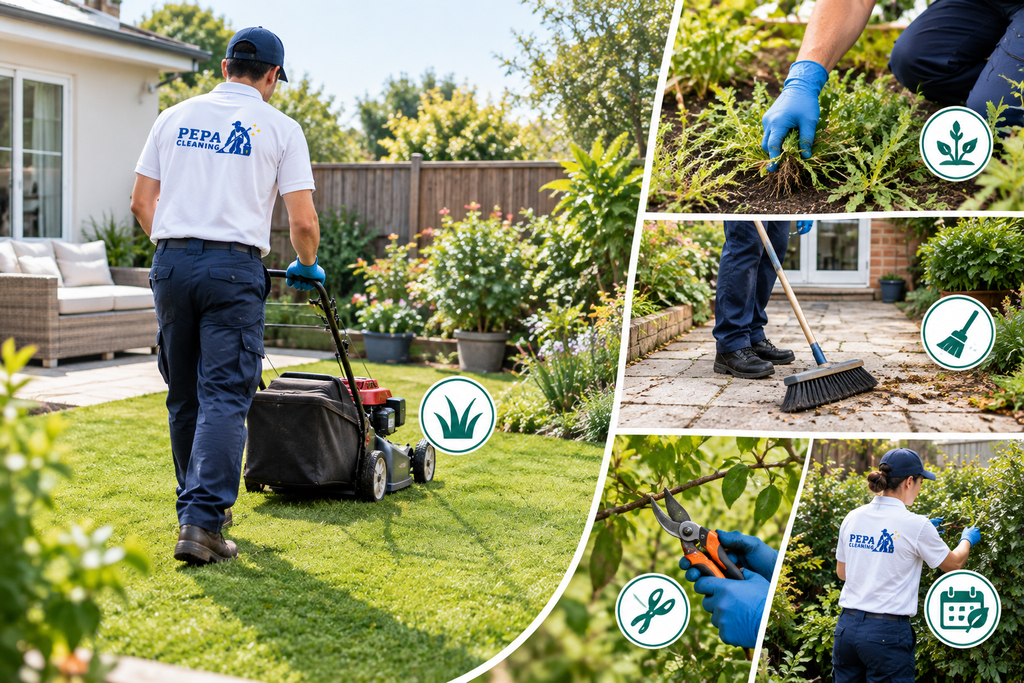
  • How to Maintain a Garden When You Don’t Have Time

    How to Maintain a Garden When You Don’t Have Time

    Learn simple garden maintenance tips for busy people, from quick weekly tasks to professional help that keeps outdoor spaces neat and manageable.

    A busy schedule can make garden care difficult. Work, family, and everyday responsibilities can leave little time for outdoor tasks.

    However, leaving your garden unattended for too long can lead to tall grass, spreading weeds, overgrown plants, and untidy borders.

    The good news is that you do not need to spend hours outside every week. A simple routine can help you keep your outdoor space under control.

    When time is limited, focus on the jobs that make the biggest difference.

    Grass cutting, weed removal, trimming, and clearing fallen leaves can quickly improve the appearance of your garden.

    Instead of trying to do everything at once, choose a few important tasks and complete them regularly.

    This approach can make garden care feel more manageable.

    How to Maintain a Garden When You Don't Have Time

    A short routine is easier to follow than a long list of tasks.

    For example, you could spend a small amount of time each week checking the grass, removing visible weeds, and clearing paths.

    Meanwhile, larger jobs such as pruning or seasonal tidying can be planned for specific times of the year.

    A regular routine also helps prevent small problems from becoming bigger ones.

    Grass can grow quickly during warmer and wetter periods.

    When it becomes too long, the whole outdoor space can start to look untidy. Long grass can also make paths and borders harder to maintain.

    Therefore, regular cutting should be one of your main priorities.

    If you do not have time to mow regularly, arranging professional garden maintenance can help keep the grass under control.

    Weeds can quickly take over unused areas.

    They may appear between paving, along paths, around borders, and in flower beds. If they are left for too long, they can become more difficult to remove.

    For this reason, check for weeds whenever you have a few spare minutes.

    Removing small patches early can save you from a much larger job later.

    Fast-growing plants can quickly make an outdoor space look crowded.

    Regular trimming helps keep plants within their intended areas. It can also prevent branches and foliage from blocking paths or covering other plants.

    However, avoid cutting plants without checking the appropriate method and season.

    If you are unsure, professional garden maintenance can provide a safer option.

    A tidy garden is not only about plants.

    Paths, patios, and outdoor areas can collect leaves, weeds, dirt, and other debris. When these areas are ignored, the entire space can look untidy.

    As a result, clearing paths regularly can make a noticeable difference.

    Even a quick tidy-up can help keep the area looking more presentable.

    How to Maintain a Garden When You Don't Have Time

    If you are planning changes to your garden, consider plants that do not require constant attention.

    Some plants need frequent pruning, watering, or special care. Others can be easier to manage once established.

    Choosing suitable plants can therefore reduce the amount of time you need to spend on maintenance.

    Before planting, consider the amount of sunlight, space, and care each plant needs.

    A common problem for busy homeowners is putting off small tasks.

    One missed grass cut may not seem important. However, several missed weeks can turn into a much larger job.

    Similarly, a few weeds can quickly become a larger patch.

    Try to deal with small problems when you notice them. This can make future maintenance much easier.

    A simple schedule can help you remember important tasks.

    You could divide jobs into weekly, monthly, and seasonal tasks.

    • Check the grass
    • Remove visible weeds
    • Clear leaves and debris
    • Check paths and outdoor areas
    • Trim fast-growing plants
    • Check borders
    • Clear unwanted growth
    • Tidy less-used areas
    • Prune suitable plants
    • Prepare outdoor areas for changing weather
    • Remove larger amounts of fallen leaves
    • Review plants that need replacing or additional care

    The exact schedule will depend on your garden, plants, and local conditions.

    Sometimes there simply is not enough time to keep up with everything.

    A garden may become overgrown after a busy period at work, while travelling, or during other major life commitments.

    In these situations, professional help can save time and prevent the work from becoming overwhelming.

    Professional garden maintenance can include grass cutting, trimming, weeding, clearing, and general outdoor upkeep, depending on the service required.

    You do not need to spend every weekend working outdoors to have a tidy garden.

    A professional team can handle regular maintenance while you focus on other responsibilities.

    For example, arranging regular visits can help keep grass, plants, paths, and other outdoor areas under control.

    This can be particularly useful for busy homeowners, landlords, rental properties, and properties that are not occupied all the time.

    Maintaining a garden can be difficult when your schedule is already full.

    The key is to focus on regular, manageable tasks. Keep grass under control, remove weeds early, trim plants when needed, and keep paths clear.

    Most importantly, do not wait until the garden becomes completely overgrown.

    If you do not have enough time for regular upkeep, professional garden maintenance can make the job much easier.

    The ideal schedule depends on the size of the garden, weather, plants, and how quickly the grass and weeds grow. Regular checks can help prevent larger maintenance problems.

    Grass cutting, weed removal, trimming, and clearing paths are good starting points. These tasks can make an outdoor space look noticeably tidier.

    Create a simple routine and focus on the most important jobs. If you still do not have enough time, professional garden maintenance can provide regular support.

    Yes. Professional garden services can help with tasks such as cutting long grass, removing weeds, trimming plants, and clearing unwanted growth.

    Yes. Outdoor spaces continue to change with the seasons. However, the type and frequency of maintenance may vary throughout the year.

    A busy schedule should not mean your outdoor space has to become overgrown.

    PEPA Cleaning provides garden maintenance services in West London to help keep outdoor areas tidy and manageable. Whether you need regular upkeep or help bringing an overgrown garden back under control, our team can help.

    You can also explore our window cleaning, carpet cleaning, hard floor polishing, and waste removal services for other areas of your property.

    Get in touch today for a free quote.

    Phone or WhatsApp: +44 7721 830704
    Email: contact@pepacleaning.com
    Website: https://pepacleaning.com/